SATURDAY, OCTOBER 24, 2026  /  10-MINUTE READ

CASH & CHAOS

MARKETS, MONEY AND THE MADNESS IN BETWEEN.

Sponsored by

Good morning. Big numbers did not guarantee a good week. Meta grew revenue 26%. GE Aerospace lifted orders 49%. GM announced a $20 billion buyback. All three stocks finished roughly 9% lower.

The broader market was less dramatic: SPY fell 0.43%, QQQ lost 0.76%, and small-cap IWM gained 1.96%. Those are ETF price returns, not index returns. The week rewarded very different things from the earnings headlines.

For this Saturday review, we separate growth from cash, authorizations from completed purchases, and orders from deliveries. All stock returns below cover October 16–23 closing prices; they capture the entire week, not just the reaction to one announcement.

Meta added $105 billion of contractual commitments.

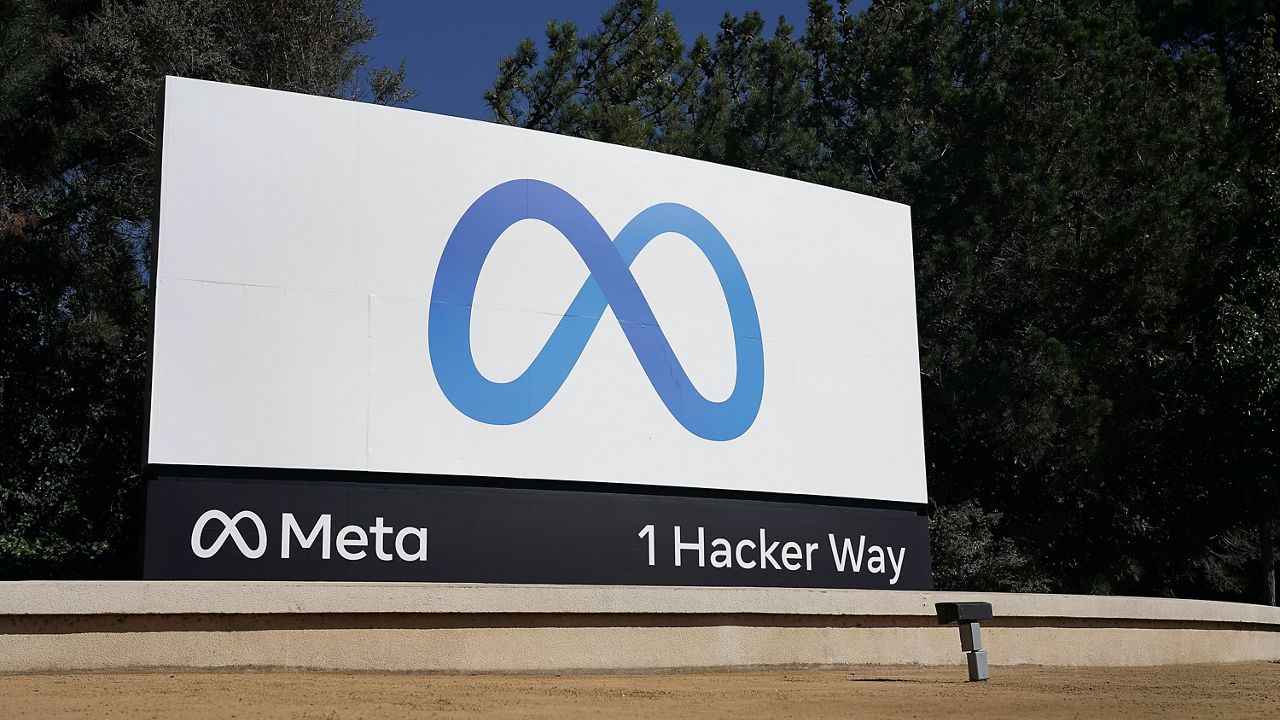
Meta headquarters sign in Menlo Park

Menlo Park, 2021 archive. Tony Avelar / AP, via Spectrum News.

Meta’s spending commitments are accelerating while less operating cash reaches shareholders. Its September filing disclosed $454.52 billion of non-cancelable contractual commitments, up from $349.31 billion in June—an increase of $105.21 billion, or 30%. Meta lost 9.40% for the week.

The payment schedule sharpens the issue: commitments due in 2027 rose 49%, to $121.41 billion, from $81.65 billion in June. Another $45.85 billion is due in the remainder of 2026. These contracts cover cloud capacity, infrastructure, energy and consumer hardware; they are not all AI spending or debt payable today.

Q3 cash bridge20252026
Operating cash flow$30.00B$32.79B
Capital spending¹$19.37B$34.91B
Free cash flow$10.63B−$2.12B

Source: Meta earnings release. Rounded. ¹Includes finance-lease principal; free cash flow is non-GAAP.

Quarterly operating cash grew 9%, while capital spending rose 80%, pushing free cash flow below zero. The advertising engine is producing more cash, but the investment program is absorbing it faster.

This is bigger than one weak cash quarter. Across nine months, operating cash rose 22% to $96.87 billion. After $83.06 billion of property-and-equipment purchases and $2.77 billion of finance-lease principal, free cash flow was $11.05 billion—down 63% from $29.51 billion a year earlier. That calculation uses Meta’s definition, before dividends and other financing uses.

The capital-allocation shift is already visible: cash spent on share repurchases was zero versus $26.25 billion in the first nine months of 2025. Meta also raised $24.91 billion net through debt issuance. Its cash cushion therefore reflects financing decisions as well as the strength of advertising.

The counterweight remains substantial. Revenue grew 26% to $64.60 billion, above the prior $61–$64 billion guide. Ad impressions rose 10%, price per ad increased 14%, and cash plus marketable securities totaled $82.45 billion. Management guides fourth-quarter revenue to $73–$76 billion. Faster monetization is a credible source of funding, not merely a distant AI promise.

The filing separately lists $355.73 billion of leases not yet commenced and up to $14.72 billion of contingent cloud purchases. Those categories have different timing and conditions. Nor can gross contractual payments simply be subtracted from forecast operating cash: operating costs already reduce that cash-flow measure.

C&C’s reading: the concern is shrinking financial flexibility, rather than an immediate liquidity crisis. Stronger ad monetization could replenish cash after investment; continued spending growth ahead of cash generation would keep pressure on shareholder returns. The commitments schedule makes that trade-off harder to reverse, even if a single quarter’s earnings looks excellent.

Read Meta’s commitments and payment schedule →

Nvidia’s $35 billion queue meets a capacity limit.

Nvidia headquarters with company logo in Santa Clara

Santa Clara headquarters, archive. Coolcaesar; edit by Jacek Halicki / Wikimedia · CC BY-SA 4.0.

China’s demand for Nvidia chips is easier to establish than Nvidia’s ability to supply it. Reuters reported Tuesday that ByteDance, Alibaba and Tencent ordered more than three million RTX PRO 5500 cards, with a combined sticker value above $35 billion. Nvidia ended the week down 1.48%.

The report, citing people familiar with the matter, said requested quantities exceed planned production and Nvidia cannot guarantee filling them. These are workstation cards, rather than its most advanced data-center processors. Reported customer demand is not company-confirmed revenue or a guaranteed backlog.

The latest quarterly filing supplies a costly precedent. Nvidia recorded a $400 million H200 inventory and purchase-obligation charge in the first half of fiscal 2027 as demand diminished under restrictions. Chinese restrictions prevented it from selling all the H200 products licensed by the U.S.; those shipments represented less than 1% of its latest quarterly Data Center revenue.

Wednesday’s separate supply-chain expansion targets 2.5 times the substrate capacity over three years and includes a $1.1 billion reservation advance to KYEC. That is concrete investment behind future supply, although it does not specifically guarantee delivery of these Chinese orders.

RTX workstation cards are a different product; the H200 charge illustrates policy risk, not evidence these orders will fail. Reuters puts samples in December and commercial shipments in early 2027. Demand is substantial, but revenue depends on production and permitted deliveries. Past restrictions have already converted anticipated sales into costs.

Read Reuters on the orders and supply limits →

GM’s buyback grew. Its profit midpoint did not.

GM logo on the Renaissance Center in Detroit

Detroit, 2015 archive. Getty Images / AFP, via Daily Sabah.

GM’s biggest number this week was an authorization; its strongest guidance improvement was in cash flow. Tuesday’s results included a new $20 billion share-repurchase program. The stock nevertheless lost 9.58% across the week.

2026 guidancePreviousUpdated
Adjusted EBIT$14–$16B$14.5–$15.5B
Adjusted auto FCF$9.5–$11.5B$11.5–$12.5B
Adjusted EPS$12–$14$12.75–$13.75

The operating-profit midpoint remains $15 billion. The range narrowed around it. By contrast, the adjusted automotive free-cash-flow midpoint rose from $10.5 billion to $12 billion, a roughly 14% improvement. The earnings-per-share midpoint increased about 2%.

The quarterly presentation identifies higher automotive earnings and tariff timing behind $5.9 billion of adjusted automotive free cash flow, up $1.7 billion. On the call, management also attributed the annual upgrade to operations, lower projected capital spending and tariff timing. Cash arriving sooner is valuable, but does not necessarily recur.

CFO Paul Jacobson explicitly said this year’s tariff-refund benefit is not expected to repeat in 2027. The counterweight is lower expected EV supplier-settlement payments next year. Those opposing movements make the durability of the cash improvement more useful to investigate than the size of the buyback headline.

GM completed its previous $6 billion repurchase program. The new authorization spans multiple years, has no expiry and can be suspended. Repurchases can lift per-share earnings while total operating profit stays flat; management linked the EPS revision to buybacks already completed. The cash upgrade supports capital returns, but extrapolating its full benefit into next year would overstate the recurring improvement.

See GM’s old and new guidance side by side →

GE’s quarterly cash dip hides a stronger annual trend.

GE Aerospace logo on a company facility

Company facility, archive. jetcityimage / iStock, via Manufacturing.net.

GE Aerospace’s cash conversion looks better across nine months than in the latest quarter alone. Tuesday’s results showed orders up 49% to $19 billion and quarterly free cash flow down 14% to $2.0 billion. But nine-month free cash flow reached $6.73 billion, up 13.4%. The stock fell 8.98% this week.

On the call, CFO Rahul Ghai traced the quarterly working-capital drag to services-billing timing and higher amounts owed by aircraft manufacturers. The filing shows a broader trade-off: higher receivables absorbed cash, while slower inventory growth helped offset it. Rising profit and rising collections need not land in the same quarter.

Commercial services revenue grew 17%, backed by shop visits and spare parts. That installed-engine maintenance business supports repeat sales beyond initial deliveries. Management raised annual free-cash-flow guidance to $9.1–$9.4 billion, $200 million above the prior range, and expects low-double-digit commercial-services growth in 2027.

There is still a meaningful timing limit. The filing lists $178.75 billion of company-wide services obligations, with only 12% expected to become revenue within one year. That broader figure differs from the commercial-services backlog cited on the call; neither is cash immediately available.

The evidence supports growing demand and improving year-to-date cash generation. It does not support treating one weak cash quarter as a broken franchise. Slower collections that persist beyond billing timing would weaken that assessment; the annual cash guidance provides a concrete benchmark.

Read GE’s cash bridge and backlog timing →

Elon Musk. Jensen Huang. Washington. What’s the Connection?

AI is moving into the physical economy.  

Elon is building it. Jensen sees it in Agriculture. Washington is backing it. And DIT AgTech is already putting it to work in livestock. 

Most investors haven’t connected the dots yet. 

At $1 a share, you still can.

Finally, a Monday that doesn’t feel like one.

Imagine a Saturday where you're not catching up on the CRM you didn't touch all week. 

HubSpot's new self-updating CRM doesn't wait for you to log back in. Friday's calls are already logged. The deal that needs a nudge Monday morning is already flagged. The automation you set up once keeps running without you thinking about it. None of it needed you over the weekend. 

Customers are already seeing it pay off: 45% more deals closed. Finally, you start Monday caught up, not behind.

The Mag 7 + three: the full week.

Tesla and Apple finished higher; Meta and Alphabet led the losses in this watchlist. A technology-heavy portfolio could therefore feel much worse than the modest decline in the broad-market ETF.

StockFriday closeWeek
AAPL$347.73+1.24%
MSFT$524.51−0.86%
NVDA$210.96−1.48%
AMZN$248.00−0.80%
GOOGL$320.21−5.98%
META$642.62−9.40%
TSLA$372.22+4.93%
AMD$516.79−2.26%
AVGO$321.68−2.15%
MU$877.55−0.15%

USD. Adjusted regular-session closes, October 23 versus October 16, 2026. Price changes exclude dividends. Editorial watchlist, not an official index.

Netflix’s ad reset matters more than its EPS beat.

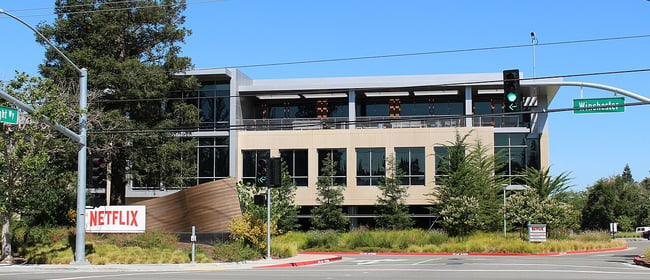
Netflix offices and sign in Los Gatos

Los Gatos offices, archive; cropped. Coolcaesar / Wikimedia · CC BY-SA 4.0.

Netflix cut its advertising forecast while preserving its annual margin target. The stock fell 6.64% this week after Tuesday’s update reduced expected 2026 ad revenue to about $2.7 billion from $3 billion, citing slower rollout of some ad-product capabilities.

That is a 10% advertising reduction, but the $300 million difference equals only about 0.6% of the $51.1 billion annual revenue outlook. Subscription growth outperformed expectations, helping absorb the disappointment. The full-company revenue forecast is just 0.2% below the previous midpoint.

Quarterly EPS of $0.87 exceeded management’s July forecast of $0.82. Revenue of $12.874 billion was only about 0.1% above its $12.860 billion forecast. Netflix said expense timing primarily explained the operating-margin upside, so the earnings beat is weak evidence of accelerating sales.

The annual operating-margin target remains 31.5%, unchanged from July, despite an expected 30-basis-point annual drag from fourth-quarter headcount reductions. That is the important counterweight: advertising weakened, but the overall profit target held.

The forecast also prevents extrapolating the 34.6% third-quarter margin: management expects 26% in Q4, including restructuring costs. Subscription strength is buying time for the ad rollout. The durable test is whether advertising catches up without repeated delays or additional margin concessions.

Read Netflix’s advertising and margin update →

Nebius’s customers help fund the buildout. A gap remains.

Nebius data center and company logo in Finland

Finland data center. Courtesy of Nebius.

Nebius’s new $3.5 billion Citi facility buys time while customer payments and construction bills arrive on different schedules. Thursday’s senior secured facility lasts 364 days. NBIS fell 4.07% this week; CoreWeave lost 11.65%, while Applied Digital gained 1.11%. These are full-week moves, not a shared event reaction.

The June-quarter cash statement shows $2.25 billion of operating cash against $5.66 billion of purchases of property, equipment and intangible assets: a $3.41 billion shortfall before other investing and financing flows. Positive operating cash did not make the buildout self-funding.

The composition matters. Deferred revenue contributed $1.20 billion to quarterly operating cash, alongside $1.19 billion from receivables. Across the first half, deferred revenue contributed $4.40 billion of $4.50 billion total operating cash. Collecting before providing service helps fund construction, but creates a future delivery obligation rather than recurring cash earned twice.

June ended with $8.04 billion of cash and equivalents, plus $1.06 billion of restricted cash. Those are not today’s balances: Nebius subsequently raised $5.75 billion gross in August convertibles, maturing in 2030 and 2034. Longer-term financing is already part of the mix. Subsequent spending prevents simply adding those proceeds and Citi’s committed facility to June cash.

The August shareholder letter supplies the strongest counterargument: management expected more than $9 billion of customer prepayments in 2026. About 70% of Q2 deals included prepayments, covering 50–60% of associated capex. That coverage applies to those deals, not the whole construction program; the annual prepayment forecast also includes money already received.

First-half investment was $8.13 billion. The $20–$25 billion annual capex plan reaffirmed on the August call implied $11.87–$16.87 billion in second-half spending. That is planned investment, not an unfunded deficit: payment timing, customer receipts and the additional financing matter.

Citi’s initial spread is 2.75 percentage points over Term SOFR, rising as high as 3.50 points subject to adjustments. The benchmark is additional, and available financing is not proof the full amount is drawn. Nebius says the bridge gives it flexibility over longer-term financing for 2027 and beyond.

C&C’s reading: customer financing materially improves the buildout economics, but the short maturity leaves execution and refinancing linked. Commissioning delays could postpone service revenue while drawn debt accrues interest. Timely deployment plus longer-term funding would reduce that mismatch; the facility announcement alone does not resolve it.

Check the facility’s maturity and interest terms →

Businesses expand. Households still feel squeezed.

Friday’s S&P Global flash composite PMI eased to 57.6 from 58.4, still above the 50 expansion threshold. Michigan’s final consumer-sentiment index was 48.0, nearly unchanged from September’s 48.1. Year-ahead inflation expectations rose to 4.7% from 4.6%.

The combination matters for earnings: business activity can grow while customers feel worse about affordability. Companies with pricing power may sustain revenue; sellers of expensive discretionary purchases face a tougher conversation. These are surveys, not a direct measure of GDP or future sales.

Prediction markets still favor a Fed pause.

Polymarket’s October meeting contracts priced no change at 93.5% and a quarter-point increase at 6.5% at 3:41 a.m. ET Saturday. Individual contracts trade separately; their prices need not sum exactly to 100%. These are market-implied probabilities, not Federal Reserve forecasts. The October 27–28 meeting is still ahead.

See the Fed contracts and resolution rules →

Upgrades and downgrades.

AST SpaceMobile: Scotiabank upgraded the stock to Sector Outperform from Sector Perform, with a $55.70 target. October 23 report.

Norwegian Cruise Line: JPMorgan downgraded it to Underweight from Neutral, with an $11 target. October 23 report. Both are rating changes, not simply new price targets.

Crypto, briefly.

Weekend trading continues: Coinbase spot quotes at 3:41 a.m. ET Saturday put Bitcoin at $80,734 and Ether at $2,377. These are USD snapshots, not Friday closes or weekly returns. Bitcoin · Ether.

Forwarded this email? Get Cash & Chaos in your inbox.

Independent market commentary. Company guidance and C&C analysis are distinguished; forecasts are not guarantees.