Good morning. Leopold Aschenbrenner sold much of his public stock portfolio under pressure in July. Yesterday, one of the investments he kept began trading on Nasdaq. His hedge fund, Situational Awareness, lost 67% in a single month and turned to Citadel for cash. Now he’s discussing raising fresh money, and lenders have a market price for his stake in Anthropic.
Anthropic closed its first day at $97.17, up 17.1% from its $83 IPO price. At 9:01 a.m. ET Friday, Anthropic traded at $87.22, down 10.24% from that close and still 5.08% above the offer price. A bank valuing the fund’s collateral could see both moves before it had a second closing price.
The selling spread across chip markets. At 8:51 a.m. ET, December Nasdaq-100 futures were at 26,140, down 1.73% from the prior close. S&P 500 futures fell 0.95% to 7,129 and Dow futures fell 0.32% to 49,021. South Korea’s Kospi closed down 5.2%, and Taiwan’s Taiex fell 6.2%.
|
|
How a 67% loss forced an AI fund to sell to Citadel | 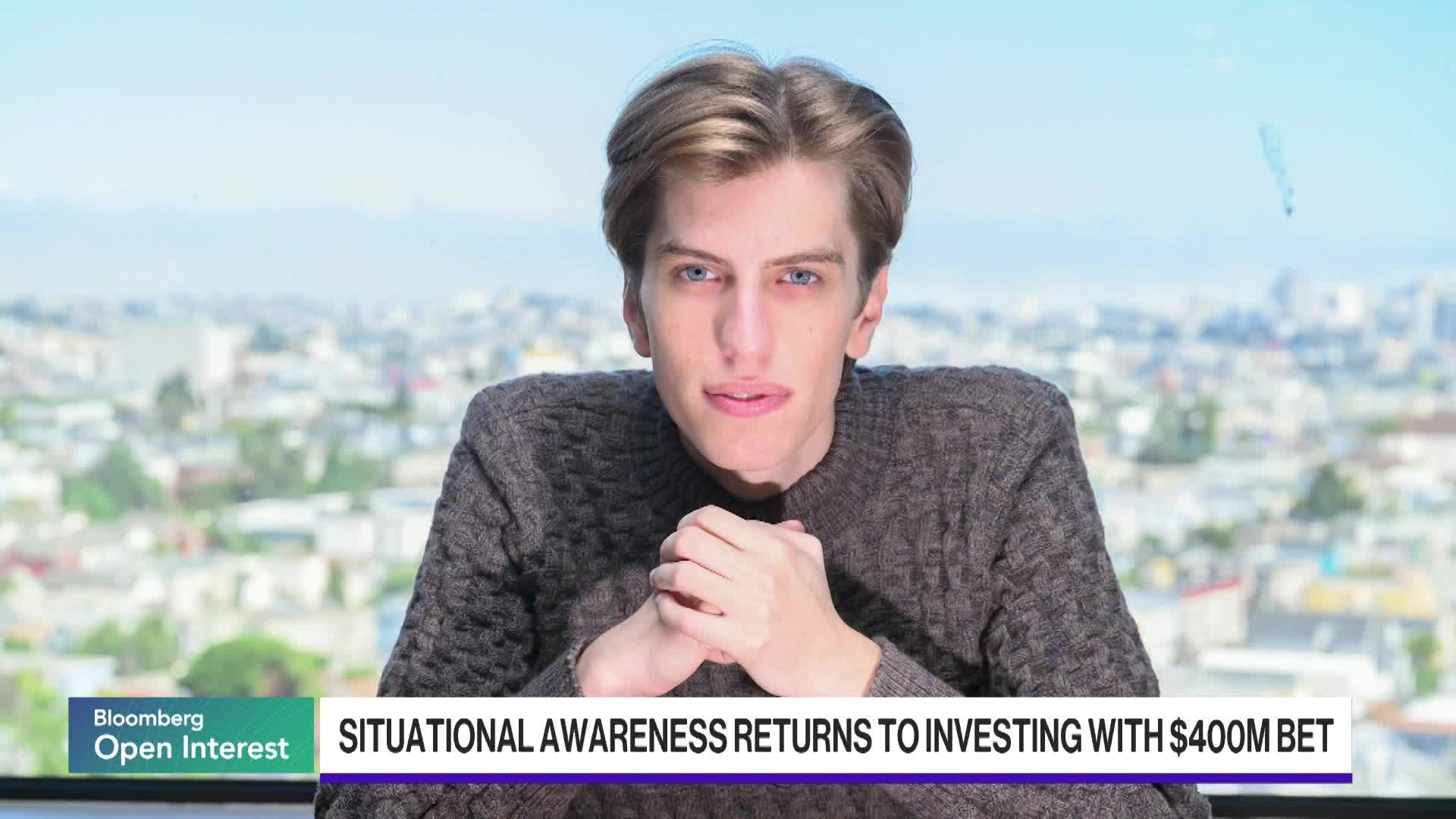 | Situational Awareness founder Leopold Aschenbrenner. Bloomberg Open Interest, August 2026.
In July, Citadel bought the bulk of Situational Awareness’s public stock portfolio at a reported discount of about 10%. Selling to a single buyer meant accepting less than the quoted value of the holdings. It also meant getting cash before another round of forced sales pushed those quotes down again. This week the European Central Bank used the episode to illustrate how losses at one leveraged fund can spill into the prices other investors receive. ECB review, note 85
Aschenbrenner had paired two views of the same technological change. Companies that sold memory, electricity and computing capacity stood to gain as AI grew. Software companies whose products it could displace stood to lose. The fund could buy the first group and sell the second group short. In a broad market decline, gains on the shorts might cushion losses on the longs. In a reversal of the AI trade itself, the fund could lose on both. That is what the ECB says happened in July.
Two stocks show the scale. At the end of June the manager disclosed $5.67 billion of Sandisk common stock and $5.57 billion of Micron common stock. Together they accounted for nearly 56 cents of every dollar in its $20.24 billion Form 13F table. A 13F covers specified publicly traded securities. The manager’s short positions, borrowing and private investments sit outside that denominator, so the filing cannot tell us what percentage of investors’ capital was riding on memory.
| Public holdings disclosed | June 30 | Sept. 30 |
|---|
| Total 13F value | $20.24B | $1.58B | | Sandisk common shares | 2,495,344 | None | | Micron common shares | 4,828,786 | None | | CoreWeave common shares | 7,479,558 | None | | SharonAI common shares | 5,396,127 | 8,070,950 |
SEC Form 13F. The total includes the value of shares underlying disclosed options.
Falling prices put two demands on the same pool of cash. Lenders wanted more collateral against the fund’s borrowings. Buying back a rising software short also cost more than the fund had received when it sold the shares. The obvious source of cash was to sell liquid winners. But a screen price reflects what the next buyer will pay for a modest order. A fund selling several billion dollars of closely related stocks may have to keep cutting its price to find the next buyer. Citadel could take a large block in one transaction. The discount bought the seller time and transferred the risk of selling the positions onward to the buyer. IFR’s reporting on the prime brokers
The experience depended enormously on when an investor arrived. Using the reported 439% first-half gain and 67% July loss, $100 invested at the start of January would have grown to $539 by June, then fallen to about $178. The same $100 invested at the end of June would have become $33. Both results are consistent with the investor letter Reuters reported, which put the year-to-date gain at about 80% after July. They are illustrations using rounded returns. Neither can be derived by subtracting one quarter’s SEC holdings from the next. Reuters on the investor letter
By September the manager still had ways to profit from a rebound. It reported two Sandisk call positions covering 105,000 shares in aggregate. Bloom Energy and Nebius also appeared through calls. Eighteen of its 23 disclosed entries were calls, with about $1.04 billion of underlying shares between them. That figure says how much the underlying stock was worth. Strike prices, expiration dates and premiums are missing from the table. For a buyer of ordinary calls, the upfront premium is what can be lost if the options expire worthless. The filing leaves that amount undisclosed.
SharonAI went the other way. The manager reported 8.07 million common shares, up from 5.40 million in June, even as the quarter-end value of that holding fell from $457 million to $441 million. The filings establish that the share count grew and the market value fell. They cannot identify which lots Citadel bought in July or the price at which the fund acquired its additional shares. June holdings · September holdings
Why revisit the fund now? The Financial Times reports that Aschenbrenner has discussed raising capital and trading with borrowed money again, and that the fund still manages more than $10 billion, mostly in private investments. Thursday turned one of those investments into a publicly quoted security. Anthropic sold shares at $83, opened at $111.50, and closed at $97.17. That left a lender marking collateral at the first trade looking at a 12.9% drop by the bell.
A public price helps a bank value an asset. How much it will lend also depends on how quickly it can sell the shares, what another creditor already has a claim on, and how far the price might fall before it can act. IFR reported that some lenders already had recourse to the Anthropic position during the summer. The listing improves price discovery. The test for a second fund is whether Aschenbrenner can arrange enough financing to hold his investments through another reversal. The FT describes discussions. A committed credit line, with a borrowing limit and collateral terms, would tell investors how much those discussions have achieved.
|
|
Intuit cuts its sales outlook while Mailchimp is still in the forecast |  | Bending Spoons headquarters in Milan, November 16, 2026. Emanuele Cremaschi/Getty Images via CNBC.
Intuit reported $4.35 billion of fiscal first-quarter revenue and $2.91 of adjusted diluted EPS. Both exceeded pre-results estimates. For the quarter ending January 31 it expects $4.93 billion to $4.95 billion of revenue and $3.17 to $3.22 of adjusted EPS. The company lowered its full-year sales outlook Thursday and agreed to sell Mailchimp. The timing makes it tempting to read those as a single announcement. The revised forecast still assumes a full year of Mailchimp revenue.
| Q1 FY2027 | Actual | Pre-results estimate |
|---|
| Revenue | $4.35B | $4.305B | | Adjusted diluted EPS | $2.91 | $2.46 |
Quarter ended October 31. Revenue estimate dated October 14, EPS November 17. Consensus estimates only. Data provided by Zacks Investment Research, Inc., www.zacksdata.com.
At 9:00 a.m. ET Friday, Intuit traded at $278.19, down 10.27% from Thursday’s $310.02 close. The company attributed its lower sales forecast to Credit Karma. It generated about $708 million in the quarter, up 9%, but Intuit now expects just 3% to 7% growth over the fiscal year. The business earns money connecting consumers to financial products. Someone checking a credit score is a prospective customer. The valuable event for a lender is an account it wants to open or a loan it wants to make. A change in lenders’ willingness to extend credit can slow that business even while customers continue to use the app.
QuickBooks Online Accounting revenue grew 19% to roughly $1.4 billion. Intuit now guides to $23.08 billion to $23.37 billion of annual revenue and kept its adjusted EPS forecast at $22.88 to $23.12. One accounting detail matters for anyone comparing those earnings with an older note on the stock. Beginning this quarter, Intuit includes stock compensation in adjusted earnings and has restated the historical figures in its release. GAAP diluted EPS for this quarter was $2.59. Quarterly filing
Bending Spoons agreed to pay $3.68 billion for Mailchimp, about $3.31 billion in cash and $368 million in its shares. Intuit paid roughly $12 billion for the business in 2021. The difference says plenty about how the market for that acquisition has changed. Calculating Intuit’s investment return would also require the cash Mailchimp generated under its ownership, the cost of running it and the eventual proceeds after tax. The stock portion of the consideration adds a further variable.
Until the transaction closes, Intuit’s forecast includes roughly $1.26 billion of annual Mailchimp revenue, about flat to down 1%. After closing, that revenue and the associated operating costs go to the buyer. It would be easy to cut a sales model twice, once for Credit Karma today and again for Mailchimp while assuming Thursday’s guidance had already removed it. Intuit’s treatment gives shareholders a clean starting point for modeling the remaining business.
|
|
SpaceX’s $32 billion chip financing puts an 8.26% yield on the biggest tranche |  | SpaceX logo above Earth. Image via The Motley Fool and Yahoo Finance.
Buying the next generation of Nvidia chips takes both a supplier willing to deliver and someone willing to put up the money years before customers finish paying for the computing time. Bloomberg reports that $32 billion of bonds have been sold as part of a financing for equipment SpaceX will lease. The largest tranche, about $25.2 billion of Class A3 notes, priced at a yield of 8.259%. That is the yield on that class at issue. Other bonds and bank loans have their own terms. SpaceX shares traded at $130.10 at 9:01 a.m. ET Friday, down 6.02% from Thursday’s $138.43 close.
| Chip financing | Amount or term |
|---|
| Total bonds sold | $32.0B | | Class A3, included above | $25.2B | | A3 yield at issue | 8.259% | | Equipment to be financed | About $47.3B |
Source: Bloomberg reporting on the transaction. The equipment value covers a broader financing package.
The reported $6 billion sale on Thursday was the final piece of the $32 billion bond deal. Buyers had already committed to roughly $26 billion. The broader financing includes bank loans, and the equipment package is valued at about $47.3 billion. Adding $6 billion to $32 billion would count Thursday’s distribution twice. Applying the A3 yield to $47.3 billion would make a different error, treating the entire equipment purchase as if it were financed by that one security.
The equipment is expected to be leased to SpaceX for about five years. That is a long time in accelerator design. A newer chip that runs the same workload with less electricity can reduce what the older one earns per hour well before it stops functioning. If the older chips stay busy, contracted rental income can still cover payments. If customer demand weakens, the bill for an installed fleet can carry on long after its rental price drops.
For shareholders, the deal secures access to equipment while spreading its cost over time. For the bond buyer, the relevant questions are who must make payments, how well those payments cover the debt and what the equipment could fetch if the arrangement breaks down. The quoted yield gives a public price for lending against one part of that package. It also explains why a headline about the number of chips secured tells us so little about the return on using them.
|
|
More shoppers pushed Ross sales up 12% ahead of a tougher holiday comparison |  | Miosotis Jade. A Ross Dress for Less storefront. Wikimedia Commons. CC BY-SA 4.0
Ross Stores reported $6.3 billion of fiscal third-quarter sales and $1.91 in diluted earnings per share. Sales rose 12% and EPS climbed from $1.58 a year earlier. The retailer expects fourth-quarter comparable sales to grow 4% to 5% and diluted EPS of $2.16 to $2.25. That holiday sales forecast comes on top of a 9% gain last year. Shares traded at $207.27 at 9:00 a.m. ET Friday, down 5.73% from Thursday’s $219.88 close.
| Q3 FY2026 | Reported | Pre-results estimate |
|---|
| Sales | $6.3B | $6.228B | | Diluted EPS¹ | $1.91 | $1.85 |
Quarter ended October 31. ¹Company-reported GAAP EPS and analyst adjusted EPS. Prior company EPS guide $1.75–$1.83. Revenue estimate dated November 17, EPS November 16. Consensus estimates only. Data provided by Zacks Investment Research, Inc., www.zacksdata.com.
Visits drove most of the 8% comparable-store sales gain, according to management. Opening stores also helped total sales. Ross opened 51 locations during the quarter, completing its 115-store plan for the year. The distinction matters for an off-price chain. A new location gives more households access to the brand. More visits at established stores tell shareholders that shoppers who already have access keep coming back for the assortment.
The additional sales translated into better profitability. Operating margin reached 12.3%, up from 11.6% a year earlier and above management’s 11.7% to 12.0% plan. At last year’s sales level of about $5.6 billion, seven-tenths of a percentage point of margin would be worth roughly $39 million of operating profit. That illustrates the value of the improvement before giving the company any credit for the extra sales.
Ross raised its annual diluted EPS forecast to $8.75–$8.84. It includes about $0.60 per share from $253 million of tariff refunds recognized in the second quarter. That benefit belongs in the annual estimate. Thursday’s third-quarter traffic and margin performance stand on their own. For the holidays, a 4% gain on last year’s 9% increase would still put comparable sales roughly 13.4% above two years earlier. Slower growth against that base would leave stores selling considerably more than they did two holiday seasons ago.
|
|
|


