FRIDAY, OCTOBER 16, 2026  /  10-MINUTE READ

CASH & CHAOS

MARKETS, MONEY AND THE MADNESS IN BETWEEN.

Sponsored by

Good morning. Tesla’s latest demonstration involved a car leaving the ground. Back on earth, Interactive Brokers raised its dividend, Proofpoint put a cash price on Varonis, and J.B. Hunt showed how a busy quarter can still leave margins thinner.

The AI trade is getting more selective, too. Brad Gerstner says Altimeter has exited CoreWeave. Jensen Huang remains supportive. Meanwhile, Schneider Electric raised its outlook as demand for the equipment powering data centers kept growing. Six stories today, with the numbers that explain what shareholders actually get.

BEFORE THE BELL

FuturesLevelChange
S&P 5007,799.25+0.11%
Nasdaq 10030,102.50-0.14%
Dow52,572.00+0.27%

December contracts · October 16, 6:07 a.m. ET · Delayed Yahoo Finance quotes; change versus previous close.

01 / THE LEAD · TSLA

Tesla’s Roadster takes flight. Production can wait.

Tesla Roadster prototype photographed in 2017

Roadster prototype at the 2017 launch; archive, not last night’s demonstration. Smnt / Wikimedia · CC BY-SA 4.0.

Tesla showed a new Roadster with SpaceX thrusters Thursday night. Production is targeted for 2028, and the price remains undisclosed. The demonstration arrived at SpaceX’s McGregor, Texas, site with the sort of spectacle that makes a conventional car launch look like a parking demonstration.

Reuters described a two-seat car using suction on an upside-down ramp, rotating in the air and jumping over a truck. That will sell plenty of video views. Whether it sells enough cars at a profitable price is a question Tesla has not answered yet.

Premarket: $378.70, up 4.49%, at 6:19 a.m. ET in a delayed Yahoo Finance quote. Thursday’s $362.44 close, down 1.29%, came before the evening reveal; this morning’s quote captures trading after it.

For shareholders, the distinction is timing. A production target two years away gives the Roadster little immediate help to offer this quarter’s automotive earnings. Development, testing and manufacturing preparation can consume cash before the first customer delivery generates it.

The missing price also matters. A low-volume flagship can command a large price tag, but expensive engineering and specialized components still need to be paid for. Without a price, production volume or delivery schedule, there is no sensible way to turn last night’s stunts into a revenue forecast.

There is a nearer appointment with the numbers: Tesla reports earnings October 21. Automotive margins, spending and the outlook for deliveries will tell investors more about the business funding the show.

The SpaceX hardware inevitably feeds the merger conversation. We have linked the Tesla–SpaceX announcement markets and included their dated odds below. Working together on a car does not establish that the two companies will combine.

See what Tesla demonstrated →

Forget NVIDIA — These 5 Stocks Could Be Next

Looking beyond NVIDIA for your next stock idea?

MarketBeat just identified five highly rated companies worth a closer look. Get the full list, completely free, along with the bull and bear case for each stock, so you can see where the opportunity may be hiding.

02 / AI · CRWV

Gerstner sold CoreWeave. Huang is still backing it.

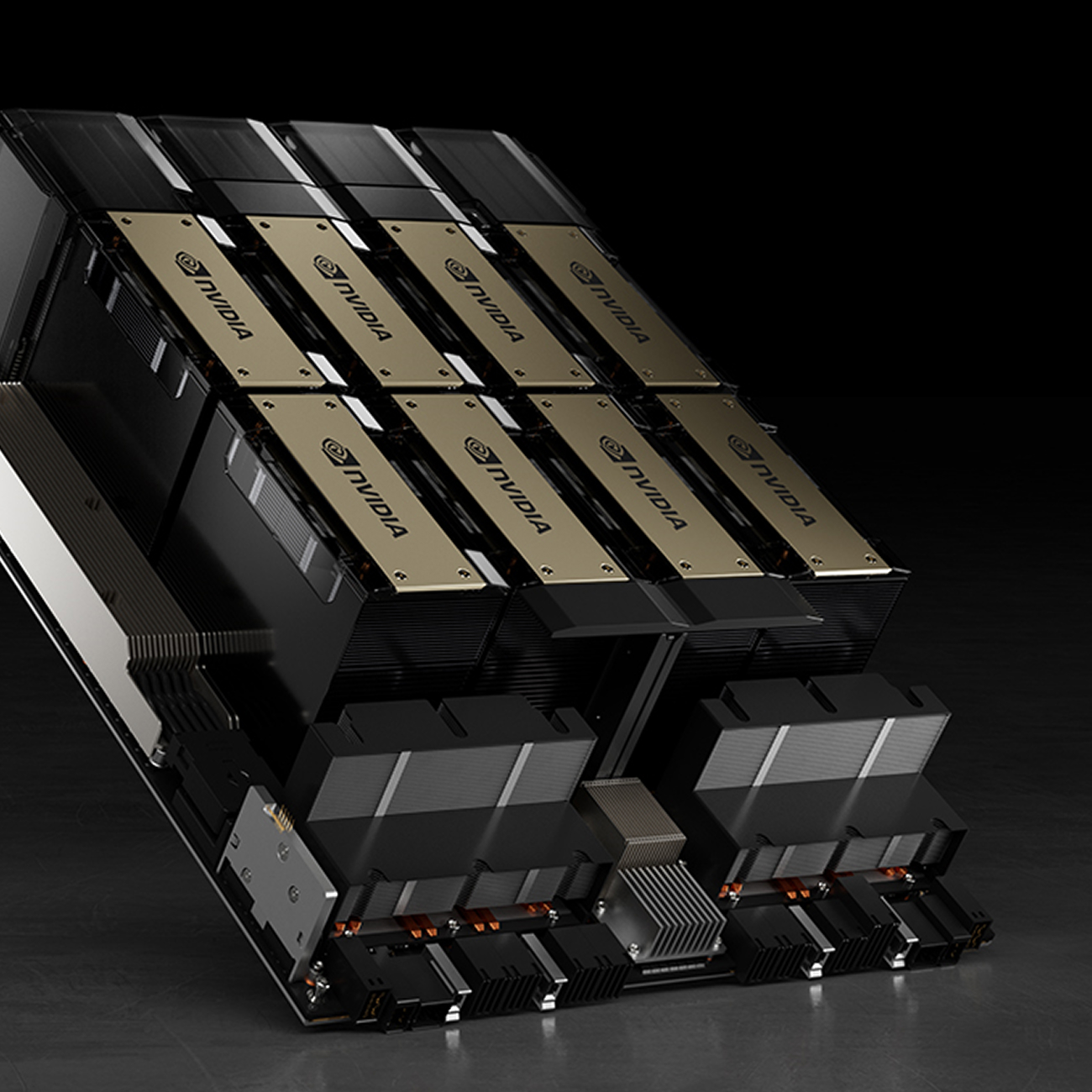
Nvidia H200 hardware shown by CoreWeave

Nvidia H200 hardware illustration. Image: CoreWeave.

Brad Gerstner says Altimeter has sold its entire CoreWeave position after reducing AI exposure over the past three months. In Thursday’s CNBC interview, he framed the exit as part of a broader pullback from a trade he thought had run too far, while still praising the company’s management.

CoreWeave rebounded 5.94% to $69.69 Thursday, following Wednesday’s 15.46% decline. Nvidia CEO Jensen Huang offered support, saying CoreWeave’s business was strengthening and that Nvidia did not need to provide a backstop. Nvidia is also an investor, so his view comes with a financial interest.

The filings need a date attached. Altimeter’s latest available 13F showed 6,073,695 CoreWeave shares on June 30, up from 4,499,075 on March 31. The June snapshot was filed August 14. It describes what the manager held then, not what it owns this morning.

Gerstner’s reported exit is therefore a later update from the interview. The quarterly filing does not establish when he sold, the prices received or the sequence of trades. Nor can an institutional holdings report stand in for executive insider-transaction filings.

The financial question remains the cost of building capacity before collecting all the related customer payments. Customer demand can be strong while investors disagree about the debt, construction spending and timing needed to serve it.

The funding debate reaches beyond CoreWeave. The Financial Times reported Friday that Anthropic received a credit rating one notch below investment grade in June. That is a newly reported assessment, not a fresh downgrade. Rapid revenue growth can attract equity investors while lenders still want more protection. Hear the FT’s report on AI debt →

One prominent seller and one supportive strategic investor can both be describing real parts of that picture. Neither a famous name nor a one-day rebound settles the funding question. The useful follow-through is evidence that new capacity comes online, customer payments arrive and financing remains available on workable terms.

Read Huang’s response on CoreWeave →

03 / DEALS · VRNS

Varonis gets a $49.75 cash offer.

Proofpoint CEO Sumit Dhawan

Proofpoint CEO Sumit Dhawan. Image: Proofpoint.

Proofpoint agreed to buy Varonis for $6.3 billion, paying $49.75 per share in cash. The deal joins Proofpoint’s security platform with Varonis’s tools for finding and protecting sensitive data. Closing is expected in the first half of 2027, subject to approvals and other conditions.

Varonis closed Thursday at $47.34, putting the offer about 5.1% above that close. By 6:19 a.m. ET, a delayed Yahoo Finance quote showed $48.45, up 2.34%. At that price, the remaining gap to the offer was roughly 2.7%.

The much larger 52% premium in the announcement uses Varonis’s June 22 unaffected closing price of $32.71. It does not mean shareholders can buy at yesterday’s close and collect a 52% gain when the deal finishes. The starting date does a lot of work in a takeover headline.

Proofpoint is privately held and backed by Thoma Bravo. The companies say financing includes equity and committed debt, with Ontario Teachers’ Pension Plan also investing. Varonis shareholders are being offered cash rather than a stake in the combined business.

That changes the investment question. For a company continuing independently, investors debate future growth and margins. With an agreed cash sale, attention shifts toward the probability of completion, the time until payment and what the shares might be worth if the transaction fails.

The gap to the offer is therefore not a guaranteed return. It compensates buyers for waiting and accepting deal risk. Nor is the remaining spread an annualized yield. The FAQ below lays out the timeline and conditions behind the headline price.

Check the cash offer and closing conditions →

04 / EARNINGS · IBKR

Interactive Brokers raises the payout by 71%.

Interactive Brokers office trading desks

Interactive Brokers offices, 2014 archive. Ɱ / Wikimedia · CC BY-SA 4.0.

Interactive Brokers reported adjusted EPS of $0.67 on adjusted net revenue of $1.87 billion. Zacks says earnings matched its rounded consensus and revenue exceeded estimates. GAAP results were higher: $0.69 per share and $1.91 billion in net revenue.

The quarterly dividend rises to $0.15 from $0.0875, an increase of about 71%. The bigger payment is due December 14 to shareholders of record December 1. That is a concrete increase in the cash shareholders receive, alongside the earnings report.

Net interest income climbed 19% to $1.15 billion, supported by larger margin loans and customer credit balances. Commissions rose 12% to $602 million. The brokerage is earning from both customer activity and the balances sitting behind that activity.

The customer base reached 5.58 million accounts, up 35%. Customer equity grew 27% to $964.7 billion, while margin loans increased 36% to $105.2 billion. The GAAP pretax margin was 78%, compared with 79% a year earlier.

Those figures explain why a brokerage can grow without needing every customer to make money on stocks. It collects commissions for transactions and earns interest income from its financing and cash operations. More accounts create opportunities for both; they do not guarantee that each account becomes equally profitable.

Premarket: $85.40, down 0.73%, at 5:39 a.m. ET in the latest available delayed Yahoo Finance quote. The balance to watch is how much new business converts into durable earnings. Interest income depends on both balances and rates, while trading activity can cool after a volatile stretch. The dividend gives investors a larger recurring payout, but it does not remove either sensitivity.

Compare earnings, balances and the dividend →

A CRM so smart, it updates itself.

HubSpot's CRM is so smart, it now updates itself. Calls get logged and summarized the moment they end. New leads get researched and a first outreach drafted, automatically. Deals move forward on their own, with next steps flagged before you have to ask. 

Even the one repetitive task you've been meaning to fix can now run itself, no code required. Customers using it are already seeing the difference. 

This isn't the CRM you have to work hard to figure out. It's the one already working before you log in.

05 / AI INFRASTRUCTURE

Schneider raises its outlook as data centers keep ordering.

Schneider Electric headquarters

Schneider Electric headquarters, archive. Wilmotte & associés architectes / Wikimedia · CC BY-SA 4.0.

Schneider Electric reported €11.46 billion in third-quarter revenue, with organic growth of 16.9%. Management raised its full-year organic revenue-growth outlook to 12%–14%, from 10%–13%, and its adjusted EBITA-growth outlook to 18%–21%, from 14%–19%.

The power-management and automation company reported triple-digit growth in data-center demand. That describes demand, not a claim that total company revenue or recognized data-center sales tripled. Its Energy Management business grew 19% organically; Industrial Automation grew 8%.

For U.S. investors, this is a useful view of the spending around the chip. A server requires power distribution, electrical equipment and cooling before it can do useful work. Those purchases create business for equipment suppliers even while investors argue about the eventual return from the AI models running inside.

Schneider’s higher revenue and profit forecasts suggest management expects more than a larger order book. It is also projecting stronger earnings growth. Delivering equipment on time, managing production costs and converting orders into sales determine whether that expectation holds.

This is relevant context for companies such as Eaton and Vertiv, which serve parts of the same infrastructure buildout. It is not evidence that their next quarters will match Schneider’s: product mix, customer exposure and delivery schedules differ.

The contrast with CoreWeave is worth keeping. An equipment supplier and a data-center operator can benefit from the same construction project while carrying very different financial obligations. Schneider’s release gives investors another set of operating numbers to weigh against the market’s nervousness about funding the buildout.

See Schneider’s growth and higher outlook →

06 / EARNINGS · JBHT

J.B. Hunt hauled more. Margins still narrowed.

J.B. Hunt intermodal containers on a freight train

J.B. Hunt containers on a BNSF train, 2023 archive. Wikideas1 / Wikimedia · CC0.

J.B. Hunt’s third-quarter revenue rose 20% to $3.68 billion, but operating income increased only 2% to $247.1 million. EPS reached $1.82, compared with $1.76 a year earlier. The release arrived after Thursday’s close.

Fuel surcharges helped the revenue increase. Excluding them, sales grew 13%. That is still substantial growth, but it is a better starting point for assessing underlying business than treating every additional revenue dollar as a new load.

Operating margin fell to 6.7% from 7.9%. Put another way, the company kept less operating profit from each dollar of sales, even while moving a larger amount of business.

Intermodal was the stronger part of the quarter: loads increased 8%, revenue reached $1.83 billion and operating income rose 18%. Dedicated Contract Services went the other way on profit, with revenue up 11% but operating income down 22%. Driver, insurance, equipment and new-business onboarding costs weighed on that division.

That split is useful beyond one trucking stock. More freight can point to healthy demand, yet the company carrying it may still struggle to turn that demand into better margins. Starting new contracts can also bring costs before an operation settles into an efficient routine.

For the next quarter, revenue growth alone will be an incomplete scorecard. The more revealing test is whether Dedicated’s costs ease as business ramps, allowing more of the sales increase to reach operating profit. Intermodal already showed that volume and earnings can move higher together.

Compare the freight divisions and margins →

EARNINGS, BRIEFLY

Two bank reports worth a closer look.

M&T earned $5.04 a share, up from $4.82 a year earlier, even as net income fell to $775 million from $792 million. A smaller diluted share count helped lift the per-share result. Net interest income edged up to $1.79 billion, while credit-loss provisions rose to $135 million from $125 million. The EPS increase looks better than the change in total profit. See M&T’s results →

Truist reported $0.56 in GAAP EPS and $1.16 adjusted, with adjusted EPS up 12% year over year. The gap includes a $1.4 billion pretax securities-sale loss, partly offset by a $581 million reserve release associated with moving its Regional Acceptance loan portfolio to held-for-sale status. Those adjustments matter: this quarter’s headline profit mixes ongoing banking earnings with balance-sheet changes. Compare Truist’s reported and adjusted results →

THE SCOREBOARD

Where big tech finished

Mag 7 + AMD, Broadcom and Micron · Editorial watchlist, not an index. October 15 regular-session closes in USD; daily change versus October 14.

StockCloseThursday
Apple$342.00-0.28%
Microsoft$539.44+1.08%
Nvidia$217.23-1.84%
Amazon$254.76+0.27%
Alphabet$349.22+0.45%
Meta$736.72-0.11%
Tesla$362.44-1.29%
AMD$562.23-1.50%
Broadcom$344.33-0.55%
Micron$931.24+1.87%

Micron and Microsoft gained while Nvidia and AMD fell. The chip trade did not move as one.

MACRO

Shoppers kept spending.

September retail sales reached $745 billion, up 0.8% from August and 6.3% from a year earlier. The Census Bureau’s figures suggest consumers were still opening their wallets. They are nominal sales, however, so higher prices can contribute to the increase.

For retailers, the next question is how much of that spending turns into profit after merchandise, wages and other costs. A strong national sales report does not tell us which chains won share or protected margins. See the retail-sales breakdown →

PREDICTION MARKETS

Tesla + SpaceX: what traders are pricing

Official announcement byImplied probability
Dec. 31, 202625%
June 30, 202748%
Dec. 31, 202762.5%

Polymarket snapshot · October 16, 6:02 a.m. ET.

These contracts concern an official merger or acquisition announcement, not a completed deal. A transaction transferring control can qualify; a noncontrolling investment does not. Prices reflect market opinion, and today’s engineering collaboration is not confirmation of a transaction. Read the odds and resolution rules →

THE STREET

A bank upgrade. A gas target cut.

Bank of America: Baird upgraded shares to Outperform with a $62 target on Thursday. Rating change →

Expand Energy: UBS lowered its target to $120 from $122 while keeping Buy. That is a reduced valuation target, not a rating downgrade. Target change →

CRYPTO

Coinbase joined the rebound.

Bitcoin was about $81,823 and Ether $2,444 in Coinbase’s October 16, 6:02 a.m. ET spot snapshot. These are point-in-time prices, not daily return figures.

Coinbase shares rose 6.32% to $183.81 Thursday. Its trading business gives shareholders exposure to crypto activity, alongside operating costs and regulation; buying the stock does not replicate owning bitcoin. Check the current bitcoin price →

Forwarded this email? Get Cash & Chaos in your inbox.