MONDAY, OCTOBER 5, 2026  /  10-MINUTE READ

CASH & CHAOS

MARKETS, MONEY AND THE MADNESS IN BETWEEN.

In partnership with

Good morning. Schneider Electric has put a price on PTC: $205 a share in cash. That gives Monday a proper deal to chew on before the opening bell.

Elsewhere, Vistra is waiting for a reported federal loan announcement, Qualcomm and Huawei have signed a patent agreement, and Foxconn has supplied another enormous AI hardware sales number. Firmus is preparing to ask public investors how much that infrastructure opportunity is worth.

Here’s where things stand before the U.S. session.

BEFORE THE BELL

−0.14%S&P 500
7,766.75
−0.22%Nasdaq 100
30,993.75
−0.18%Dow
51,385.00

December futures · October 5, around 7:03 a.m. ET · delayed Yahoo Finance quotes; change versus prior close.

THE BIG STORY · PTC

PTC shareholders woke up to a $205 offer.

PTC graphic showing product engineering, industrial equipment and energy infrastructure

PTC / company overview graphic.

Schneider Electric has agreed to buy PTC for $205 a share in cash, valuing the equity at $22.6 billion. Including debt and other adjustments, the enterprise value is $23.7 billion. The offer is 42.3% above Friday’s close.

PTC was trading around $197.93, up 37.4%, at 7:13 a.m. ET. That remaining gap to $205 deserves attention: shareholders still have to wait for approvals and completion, which the companies expect in the third quarter of 2027. Both boards have approved the transaction.

Why Schneider wants it: PTC makes software used to design products and manage the engineering information behind them. Schneider supplies energy management and industrial automation. Bringing those together could let a manufacturer follow a product from the engineer’s drawing through production and the power used to make it.

That is a useful sales pitch because those decisions affect one another. A design change can alter the materials, machinery and electricity a factory needs. Software that connects those choices could become harder to replace once it is embedded in a customer’s operations. PTC’s business overview helps explain why an electrical equipment giant wants an engineering software company.

The purchase is expensive enough to change Schneider’s own finances. Its plan includes €5–6 billion of new equity and €16–17 billion of debt. Management is targeting €250 million in annual cost savings by year three and roughly €800 million in revenue synergies.

For Schneider shareholders, those cross-selling ambitions will need to earn their keep. Cost savings are easier to put in a spreadsheet than convincing customers to buy another product. New shares also spread future profits across a larger shareholder base, while debt adds interest expense.

For PTC holders, the question is more immediate: sell into the jump or remain exposed to the deal until it closes. At the premarket quote, the offer leaves about 3.6% gross upside if completed on these terms. That spread compensates investors for time and completion risk; it is not a second 42% payday waiting to happen.

Read more: the $205 cash deal →

POWER & UTILITIES · VST

Vistra may get $4.2 billion to squeeze more power out of its reactors.

Perry nuclear power plant on Lake Erie, photographed in 2016

Erik Drost / Wikimedia Commons. 2016-05-13. CC BY 2.0.

Washington is reportedly preparing to help Vistra produce more electricity from nuclear plants it already owns. Reuters reported Saturday that the government would lend the company about $4.2 billion, with an announcement expected Monday at its Ohio plant on Lake Erie.

The report cites a person familiar with the matter. The loan was not yet officially confirmed in our morning check. Vistra was around $146.67, up 4.7%, at 7:13 a.m. ET, so investors are already assigning some value to the possibility.

The proposed work would increase output at at least three of Vistra’s four nuclear stations. These projects are known as uprates: changing equipment or fuel arrangements so an existing reactor can generate more electricity. Vistra’s six reactors currently provide more than 6.5 gigawatts of capacity.

Why this gets investors interested: a functioning nuclear plant already has a site, a grid connection and an operating organization. Extra output can spread some of those fixed costs across more units of electricity sold. Building an entirely new station is a much larger undertaking.

There is still a substantial investment between getting a loan and selling another megawatt-hour. Equipment has to be ordered, work scheduled and the necessary reviews completed. Outages during the work can also affect cash generation. A financing headline cannot tell us when the additional earnings arrive.

The loan’s interest rate, repayment schedule and conditions therefore matter almost as much as its size. Favorable financing could reduce the upfront burden on Vistra, but borrowed money still has to be repaid. It should not be counted as $4.2 billion of revenue or a cash grant to shareholders.

The announcement to watch today is the one that fills in those details: how much extra capacity, at what cost, and on what timetable? If they are not provided, we can still recognize progress on funding without pretending we have a new earnings forecast. After the early stock move, the terms have something to live up to.

Read more: Vistra’s reported nuclear loan →

TECH & LICENSING · QCOM

Qualcomm and Huawei have a deal. It’s about patents.

Qualcomm headquarters in San Diego, photographed in 2008

Coolcaesar at en.wikipedia / Wikimedia Commons. 2008-02-17. CC BY-SA 3.0.

Qualcomm and Huawei have signed a multiyear patent cross-license covering areas including 5G, computing, AI and networking. Qualcomm also agreed to acquire certain Huawei patents in the United States, subject to required regulatory approvals.

The financial terms were not disclosed. Qualcomm was around $186.35, up 0.8%, at 7:13 a.m. ET—a modest early move compared with PTC and Vistra.

This is worth separating from the usual chip shipment headlines. A company can own technology that another manufacturer needs to use, even when the two compete in products. A cross-license sets out permissions to use each other’s intellectual property. Depending on the agreement, money may change hands to balance the value of those rights.

Qualcomm has two ways to participate in a connected device: sell the chips inside it, and license inventions used to make it communicate. The second business matters because the value of a patent does not disappear simply because a customer chooses a different processor.

For investors, an agreement like this can make the commercial relationship more predictable. Negotiated access to technology may reduce the scope for disputes that interrupt planning or force costly litigation. Acquiring patents could also strengthen Qualcomm’s own portfolio, although we do not yet know which assets are included or how much it is paying.

The restraint here is straightforward: no disclosed price means no defensible earnings uplift to calculate today. We cannot assume a large royalty payment, attach a margin to it, or treat the patent purchase as an immediate profit contribution. Licensing receipts and an acquisition payment can affect the accounts in very different ways.

Nor does a patent agreement establish that U.S. export restrictions have changed. Permission to use an invention and permission to ship a particular chip are separate matters. For now, the useful development is that two major technology companies have reached a commercial agreement across a broad set of inventions. The economics will become clearer only if more terms are disclosed.

Read more: the Qualcomm–Huawei agreement →

The 10 Best AI Stocks to Own in 2026

AI is moving from experiment… to essential.

Every major industry is integrating it.
Every major company is investing in it.

By late 2025, AI was already an $800B market — growing at a pace that could push it well beyond $1 trillion in the years ahead.

Cloud infrastructure is scaling fast.
AI-enabled devices are multiplying.
Automation is becoming standard.

But here’s the real question…

When trillions flow into this transformation — which stocks stand to benefit most?

Our new report reveals 10 AI stocks positioned across the backbone of this shift — from the companies powering the infrastructure… to those embedding intelligence into everyday systems.

If you want exposure to one of the defining growth trends of this decade, start here.

THE STOCK BOARD

Where big tech finished Friday

Mag 7 plus AMD, Broadcom and Micron: our editorial watchlist. October 2 regular-session closes · USD · daily change.

StockCloseFriday
Apple$333.69+1.02%
Microsoft$517.53+0.92%
Nvidia$233.95+1.34%
Amazon$251.52+1.33%
Alphabet$343.50+1.56%
Meta$728.08+0.30%
Tesla$370.59+4.65%
AMD$633.91+2.95%
Broadcom$355.14+3.35%
Micron$1,074.89−2.05%

Nine of the ten finished higher. Tesla led this group, while Micron fell 2.05%. These are Friday’s returns; Monday’s premarket figures appear separately with their timestamps.

AI & HARDWARE · FOXCONN

Foxconn’s AI boom is showing up in sales.

Foxconn’s Dingpu plant in Taiwan, photographed in 2016

Padai / Wikimedia Commons. 2016-08-01. CC BY-SA 4.0.

Foxconn reported NT$3.03 trillion in third-quarter revenue, up 47.1% from a year earlier. The company’s September sales release put that month at NT$1.159 trillion, up 38.4% year over year and 25.7% from August.

Those are actual sales, which makes this a useful addition to the endless parade of AI spending promises. Foxconn sits further down the supply chain, assembling the equipment customers need to turn chip orders into working infrastructure. Its cloud and networking products benefited from strong AI server demand.

There was a contrast within September’s business: consumer electronics revenue was roughly flat year over year, while the server-related business was much stronger. Reading the headline as a sudden smartphone boom would miss the more interesting part.

For U.S. chip investors, this is encouraging demand evidence—not a substitute for Nvidia’s next results. A server contains many components, and assembly revenue does not tell us the profit earned by each supplier. Product mix, customer terms and how much expensive hardware passes through the accounts all matter.

The next question is how much of that sales growth reaches the bottom line. Full quarterly results are scheduled for November 12. Until then, we have a strong revenue update, but not the margin detail needed to decide whether earnings grew at anything like the same pace.

Read more: Foxconn’s record sales →

AI & CAPITAL · FIRMUS

Firmus is bringing a very large AI IPO to market.

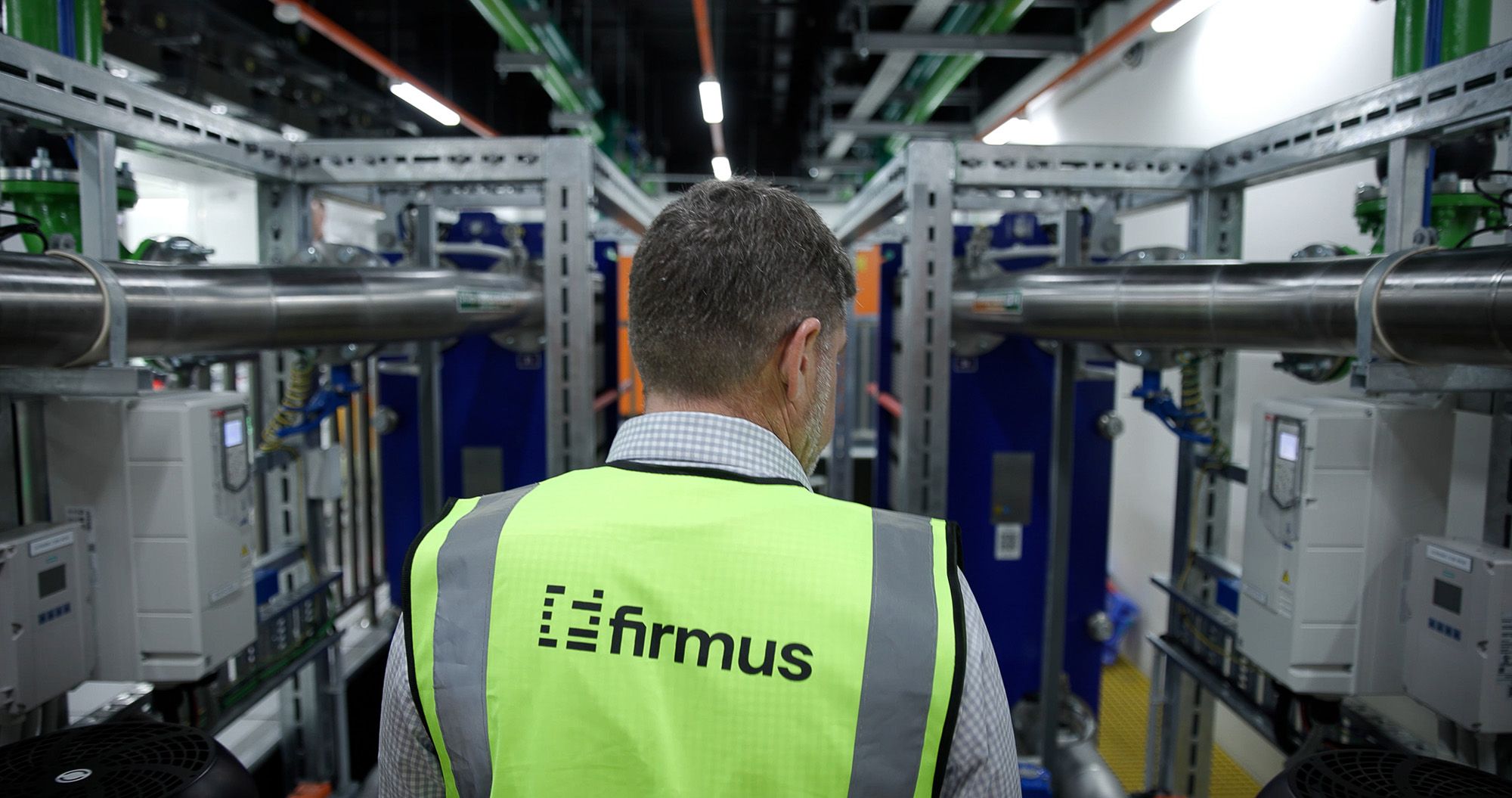
Firmus employee inside a computing facility

Firmus / company website.

Australia’s Firmus plans to allocate roughly half of an IPO worth up to US$5.5 billion to existing investors, Reuters reported Monday, citing sources. The reported A$11 offer price would value the AI infrastructure company at about US$30.6 billion.

That is nearly three times the US$10.5 billion valuation attached to its August funding round. A lot of future growth is being priced in over a very short interval.

Nvidia is among Firmus’s existing backers, but the report does not identify which shareholders would take the proposed allocation. We should not turn that into a claim that Nvidia has committed fresh money to the IPO.

The reported timetable has bookbuilding this week, a prospectus on October 12, and an expected October 23 listing. Those remain proposed dates and terms.

For U.S. investors following AI infrastructure, the prospectus could be more useful than the first-day stock move. It should help show what buyers are paying for: contracted customer demand, available computing capacity, and the cash needed to bring more capacity online.

Existing shareholders taking a large allocation can help an offering get done. It does not establish how much independent demand exists at the new valuation. That distinction becomes more important when the proposed price has moved this far in two months.

Read more: Firmus’s IPO plans →

MACRO IN A MINUTE

Today’s macro appointment: 10 a.m.

The ISM services report arrives at 10 a.m. ET, after this email. It covers September and gives investors a fresh look at activity, orders, employment and input prices across a large part of the economy.

For stocks, the combination matters. Expanding orders with easing price pressure would be easier to welcome than growth accompanied by another jump in costs. A weak headline driven by falling demand would tell a different story again. Watch the components before reducing the release to a single number or a guaranteed Fed response.

PREDICTION MARKETS

The October Fed bet favors a hold.

On Polymarket’s October Fed decision market, the no-change contract was around 83.5¢ and the quarter-point hike contract 16.5¢ at 7:08 a.m. ET. A winning contract settles at $1, so those prices are commonly read as implied probabilities.

The market resolves against the change in the Fed’s target range at the October 27–28 meeting. These are event-market prices, not a Fed forecast or CME FedWatch reading. This morning’s services data could give traders a reason to reconsider them.

UPGRADES & DOWNGRADES

Monday’s analyst calls

Wells Fargo: Morgan Stanley upgraded WFC to Overweight from Equalweight, with a $102 target.

Intercontinental Exchange: TD Cowen downgraded ICE to Hold from Buy, with a $166 target.

Tesla: HSBC raised its target to $157 from $125 but kept Reduce. A higher target is not necessarily a bullish recommendation; this one remains well below Friday’s $370.59 close.

CRYPTO SNAPSHOT

Crypto before the stock market opens

At about 7:13 a.m. ET, bitcoin was $85,939 and ether $2,712. These are Monday snapshots, separate from Friday’s equity closes above.

Crypto has traded throughout the weekend. U.S. spot ETFs resume their regular session at 9:30 a.m., giving investors another way to respond to those moves. The opening price will reflect where the underlying asset is then, rather than simply picking up where the ETF finished Friday.

Forwarded this email?

Get Cash & Chaos in your inbox. Markets, money and the madness in between, without having to keep twenty tabs open.