| SATURDAY, NOVEMBER 7, 2026 / 12-MINUTE READ | CASH & CHAOSMARKETS, MONEY AND THE MADNESS IN BETWEEN. | |
Sponsored by

Good morning. Micron fell 22% this week. AppLovin rose 71%. Micron supplies memory chips, while AppLovin uses AI to sell advertising. Their shares went in opposite directions as investors reassessed technology stocks. We also look at Airbnb, Vistra, Fox’s Roku deal, AST SpaceMobile and Axon.
|
|
AMD rebounded Friday. Micron still lost 22% for the week. |  | Jakub Hałun / Wikimedia Commons. NYSE Broad Street facade, 2023 archive. · License
AMD jumped 11.0% Friday, yet finished the week down 11.1%. Micron gained 5.1% Friday and still lost 22.0% for the week. The Nasdaq Composite rose 1.1% Friday. The S&P 500 ended the week down 2.7%.
A rebound starts from a smaller base. Imagine a $100 position that falls 20% to $80. A 20% gain takes it back to $96, not $100. Recovering the original value requires a 25% gain. That arithmetic is especially important for investors who bought the chip rally near its highs and then watched several large daily moves in both directions.
The losses also showed up across chip funds. The semiconductor ETF SMH gained 3.6% Friday but lost 11.2% over the full week. SPY, which weights companies by market value, fell 2.7% for the week. RSP, an ETF that weights S&P 500 constituents equally, fell 1.0%. The 1.7-point gap shows how much more pressure the market-weighted fund faced. Fund expenses and holdings also differ, so the comparison cannot isolate each company's contribution.
The biggest AI companies did not move together. Amazon gained 7.9% for the week while Nvidia lost 8.8%. Both have exposure to AI, but Amazon sells cloud services and also owns retail and advertising businesses. Nvidia sells much of the hardware used to build those services. The same investment cycle reaches their income statements at different times and through different products.
The Friday moves were a partial recovery from Thursday's losses. Even after Friday's 11% rebound, AMD would need to gain roughly another 12% from its closing price to recover its October 30 close. Micron would need roughly 28%. Both calculations use each stock's October 30 and November 6 closes.
|
|
Airbnb's bookings accelerate as travel spending holds up. |  | Dllu / Wikimedia Commons. Airbnb headquarters building, 2016 archive; stitched panorama. · License
Airbnb reported Q3 revenue of $4.87 billion and diluted EPS of $3.16, above FactSet estimates of $4.75 billion and $2.85. It expects Q4 revenue of $3.22 billion to $3.28 billion and raised its full-year revenue growth outlook to the high teens. Shares rose 11.7% Friday and 15.6% for the week. FactSet estimates
Nights and seats booked rose 16%, while gross booking value grew 21% to $27.7 billion. Airbnb credited both more bookings and moderately higher average daily rates. Higher prices can lift booking value even when the number of trips stays unchanged, so the 16% booking growth gives a cleaner view of activity on the platform.
Airbnb's revenue grew 19%, slightly less than gross booking value. Revenue as a share of booking value is often called the take rate. Management expects that rate to rise slightly year over year in Q4, even as it plans to spend more on marketing during the quarter. It forecasts at least low-double-digit growth in nights and seats booked and mid-teens growth in gross booking value.
Adjusted EBITDA grew 22% to $2.5 billion, or 52% of revenue. Airbnb's full-year margin forecast is approximately 36%, reflecting its seasonal business and the expected Q4 mix. It generated $1.4 billion of free cash flow in Q3, up from $1.3 billion a year earlier, and authorized another $12 billion in share repurchases. That authorization permits future purchases. The amount and price of stock actually bought will determine its effect on shareholders. Airbnb's quarterly filing
North American nights booked grew at their fastest pace in four years, according to Airbnb, and every region posted double-digit nights growth. The company says returning guests and first-time customers contributed. That breadth matters because it gives the company more than one market in which to grow, though a weaker economy or rising travel costs could still affect bookings. The Q4 revenue forecast includes about a two-percentage-point currency tailwind after hedging.
|
|
Vistra earns more from power as data center demand grows. |  | Vistra Corp. Corporate headquarters in Irving, Texas, 2021 archive.
Vistra reported Q3 operating revenue of $6.347 billion, below the $7.504 billion Zacks estimate last changed November 4, and GAAP net income of $1.14 billion. Its 2026 ongoing operations adjusted EBITDA outlook rose to $7.1 billion–$7.5 billion. The company initiated a 2027 range of $7.7 billion–$8.5 billion. Data provided by Zacks Investment Research, Inc., www.zacksdata.com
Shares rose 10.6% Friday after the results, though they finished the week down 9.8%. Revenue estimates varied widely across providers, and the Zacks figure reflects three contributing estimates in the dated snapshot.
Ongoing operations adjusted EBITDA climbed to $2.38 billion from $1.58 billion a year earlier. Management cited higher realized energy and capacity prices, a full quarter from acquired Lotus plants and the return of Martin Lake Unit 1. The increase includes output from plants Vistra bought, alongside stronger results from assets it already owned. The acquisitions added generating capacity but also required capital.
Vistra had hedged approximately 98% of expected 2027 generation as of October 30, and 78% for 2028. Those contracts give it greater revenue visibility and protection if prices fall. They also affect how quickly higher market prices flow through to earnings. A rise in the spot price of electricity cannot be applied across the entire fleet.
The reported GAAP profit also includes a $559 million unrealized gain on hedges expected to settle in future years. The gain reflects the value of contracts at the reporting date. Adjusted EBITDA is management's non-GAAP measure of ongoing operations. Vistra's separate cash-flow outlook accounts for items such as interest and taxes, but is calculated before growth spending.
Vistra also completed the Cogentrix acquisition, adding roughly 5,500 megawatts of gas generation, and authorized another $1.5 billion in buybacks. The company's 2027 cash-flow guidance before growth spending is $4.3 billion–$5.1 billion. That leaves the cost of future expansion to be considered separately.
Vistra also signed a 20-year, 207-megawatt power purchase agreement at its Odessa gas plant in Texas. A long contract can make future cash flows easier to plan around, although its price and the costs of supplying power determine its profitability. The company also began operating the Pulaski solar facility under a power purchase agreement with Microsoft. The disclosures identify customers and capacity, but do not establish the profit margin on either agreement.
|
|
Fox closes its $22 billion Roku deal. |  | Coolcaesar / Wikimedia Commons. Fox studio entrance, 2014 archive. · License
Fox completed its acquisition of Roku on Friday, combining sports and news programming with a streaming platform that reaches more than 100 million households worldwide. Fox expects approximately $400 million in annual run-rate cost savings within two years and expects the deal to add to free cash flow per share by the second full year after closing.
Roku shareholders are entitled to $95.30 in cash and 0.9799 Fox Class A shares for each Roku share held immediately before closing. Fox shareholders now own roughly 74% of the combined company, with former Roku shareholders owning approximately 26%. The original deal was announced at about $22 billion of enterprise value. The final stock component means the value a Roku holder receives moves with Fox's share price.
Fox already had content, including live sports and news, and the ad-supported Tubi service. Roku adds a platform that helps households find and watch streaming services. That gives the combined company more opportunities to sell advertising and use its distribution relationships. It also means Fox must balance its own content ambitions with maintaining a platform that competing streaming services are willing to use. The company says Roku will remain an open platform.
Fox borrowed $10.4 billion on closing day, including an $8.4 billion bridge loan that matures 364 days after closing and a $2 billion term loan. The company will need to manage that debt alongside the costs of putting the two businesses together. Its $400 million savings target is an annual rate expected within two years. Integration costs can arrive before those savings. Fox's closing filing
The Justice Department closed its investigation as the transaction completed. Roku shareholders now hold Fox shares, giving them a stake in both the streaming platform and Fox's existing businesses.
The bridge loan has a much shorter maturity than the assets Fox is buying. That makes the eventual refinancing terms important: interest costs affect how much of the combined company's cash flow remains for investment and shareholder returns. Fox says it expects the transaction to add to free cash flow per share by its second full year. That forecast will be easier to assess as it reports actual debt costs and integration spending.
|
|
|
Back Something That Actually Matters.
Anyone can invest in what’s already obvious. The interesting investors see what’s coming. DIT AgTech is helping the people who feed the world produce more with less, while tackling rising costs across the food chain.
You’ve seen it. Now be among the first to back it at $1 a share.
𝘐𝘯 𝘮𝘢𝘬𝘪𝘯𝘨 𝘢𝘯 𝘪𝘯𝘷𝘦𝘴𝘵𝘮𝘦𝘯𝘵 𝘥𝘦𝘤𝘪𝘴𝘪𝘰𝘯, 𝘪𝘯𝘷𝘦𝘴𝘵𝘰𝘳𝘴 𝘮𝘶𝘴𝘵 𝘳𝘦𝘭𝘺 𝘰𝘯 𝘵𝘩𝘦𝘪𝘳 𝘰𝘸𝘯 𝘦𝘹𝘢𝘮𝘪𝘯𝘢𝘵𝘪𝘰𝘯 𝘰𝘧 𝘵𝘩𝘦 𝘪𝘴𝘴𝘶𝘦𝘳 𝘢𝘯𝘥 𝘵𝘩𝘦 𝘵𝘦𝘳𝘮𝘴 𝘰𝘧 𝘵𝘩𝘦 𝘰𝘧𝘧𝘦𝘳𝘪𝘯𝘨, 𝘪𝘯𝘤𝘭𝘶𝘥𝘪𝘯𝘨 𝘵𝘩𝘦 𝘮𝘦𝘳𝘪𝘵𝘴 𝘢𝘯𝘥 𝘳𝘪𝘴𝘬𝘴 𝘪𝘯𝘷𝘰𝘭𝘷𝘦𝘥. 𝘋𝘐𝘛 𝘈𝘨𝘛𝘦𝘤𝘩 𝘩𝘢𝘴 𝘧𝘪𝘭𝘦𝘥 𝘢 𝘍𝘰𝘳𝘮 𝘊 𝘸𝘪𝘵𝘩 𝘵𝘩𝘦 𝘚𝘦𝘤𝘶𝘳𝘪𝘵𝘪𝘦𝘴 𝘢𝘯𝘥 𝘌𝘹𝘤𝘩𝘢𝘯𝘨𝘦 𝘊𝘰𝘮𝘮𝘪𝘴𝘴𝘪𝘰𝘯 𝘪𝘯 𝘤𝘰𝘯𝘯𝘦𝘤𝘵𝘪𝘰𝘯 𝘸𝘪𝘵𝘩 𝘪𝘵𝘴 𝘰𝘧𝘧𝘦𝘳𝘪𝘯𝘨, 𝘢 𝘤𝘰𝘱𝘺 𝘰𝘧 𝘸𝘩𝘪𝘤𝘩 𝘮𝘢𝘺 𝘣𝘦 𝘰𝘣𝘵𝘢𝘪𝘯𝘦𝘥 𝘩𝘦𝘳𝘦: https://bit.ly/4bzuWCi
A CRM so smart, it updates itself.
HubSpot's CRM is so smart, it now updates itself. Calls get logged and summarized the moment they end. New leads get researched and a first outreach drafted, automatically. Deals move forward on their own, with next steps flagged before you have to ask.
Even the one repetitive task you've been meaning to fix can now run itself, no code required. Customers using it are already seeing the difference.
This isn't the CRM you have to work hard to figure out. It's the one already working before you log in.
The week in stocks.| Stock | Friday close | Week |
|---|
| Apple (AAPL) | $342.37 | −0.66% | | Microsoft (MSFT) | $530.61 | +1.67% | | Nvidia (NVDA) | $186.64 | −8.80% | | Amazon (AMZN) | $259.30 | +7.88% | | Alphabet (GOOGL) | $284.78 | +1.77% | | Meta (META) | $610.15 | −0.79% | | Tesla (TSLA) | $358.22 | −10.40% | | AMD (AMD) | $449.04 | −11.05% | | Broadcom (AVGO) | $293.69 | −9.93% | | Micron (MU) | $690.00 | −22.01% |
Editorial watchlist. Adjusted closes from October 30 through November 6; price returns exclude dividends.
|
|
AST SpaceMobile is building a rocket to launch its satellites. |  | AST SpaceMobile. Midland headquarters, 2021 archive.
AST SpaceMobile plans to build a reusable rocket called Blacklift for its BlueBird satellites, with more than $1.3 billion committed to a deal with Firefly Aerospace. AST shares rose 7.1% Friday but finished the week down 21.1%. Firefly will supply 36 engines, a manufacturing license and engineering support. Firefly announcement
AST is building a network intended to connect ordinary cellphones directly to satellites. The business needs a constellation in orbit before it can deliver service at the scale it envisions. Launch capacity therefore affects how quickly it can deploy and replace satellites. AST has used outside launch providers and says it will continue to do so. The company says its own rocket would give it greater control over access to orbit.
The Firefly agreement has three major pieces. AST says it will pay approximately $800 million upfront for a perpetual engine license, consisting of $400 million in cash and 10 million to 14 million Class A shares, with the final share count determined by a future pricing formula. It will also pay $250 million for engines for the first three rockets and $250 million for engineering services over three years. The share component means existing shareholders will own a smaller portion of the company after issuance. AST filing
Firefly will provide its Miranda engines and a vacuum variant for the program. AST says Blacklift is planned to begin use in late 2028. Building and operating a launch vehicle introduces development, manufacturing and reliability risks alongside the potential benefit of more control. The engine agreement covers one part of the project. AST also faces the cost of the rocket itself and the facilities needed to produce it.
AST already faces the expense of building its satellites and network. Its own rocket could reduce reliance on outside suppliers, but launch savings will depend on how much Blacklift costs to build and operate, how often it flies and whether it meets its schedule.
|
|
Axon falls 18% after delayed drone orders cut its outlook. | 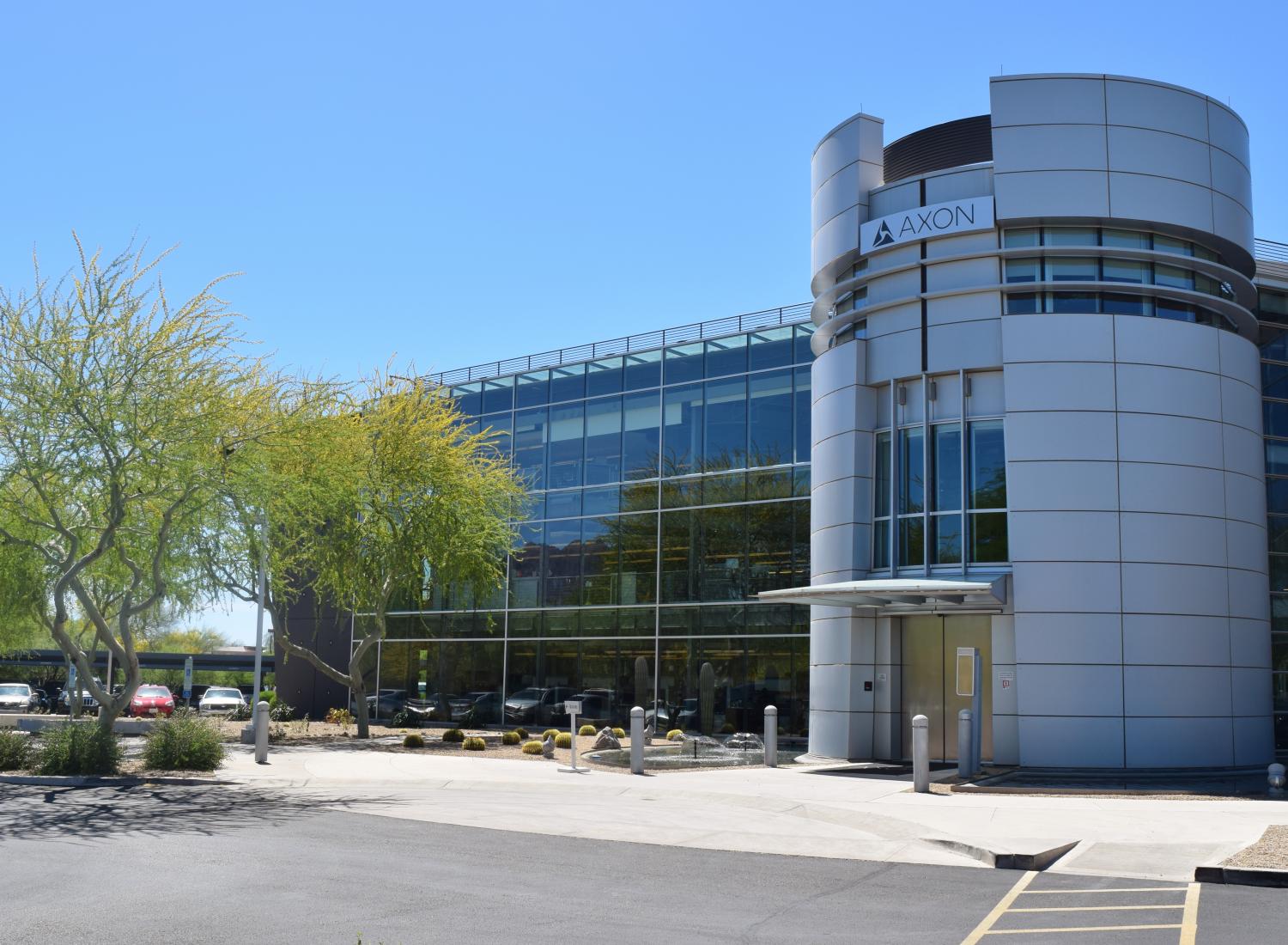 | Jimmy Jenkins / KJZZ. Axon headquarters in Scottsdale, archive.
Axon reported Q3 revenue of $908.6 million and adjusted EPS of $1.72, below FactSet's revenue estimate of $934.3 million and the S&P analyst EPS estimate of $1.89. Its Q4 revenue guide is $990 million to $1.01 billion, implying full-year sales of $3.61 billion to $3.63 billion. Shares fell 18.2% Friday and 26.8% for the week. Revenue comparison · EPS comparison
The maker of Tasers, body cameras and public-safety software reduced its annual outlook after three federal Dedrone counter-drone deployments worth approximately $130 million slipped beyond 2026. The company had expected $30 million in the third quarter and another $100 million in the fourth. A delay in delivery can push revenue into a later period even when a customer has not canceled the underlying project. Axon's revised forecast removes those deployments from this year's expected sales.
The miss came alongside meaningful growth. Revenue increased 28% year over year, and annual recurring revenue reached $1.8 billion, up 40%. Connected Devices revenue grew 16% to $472 million, helped by Dedrone and body cameras. The software and services business offers a recurring revenue stream, while large hardware deployments can make quarterly timing more uneven.
Margins and cash also deserve attention. Axon reported GAAP net income of $57 million, or $0.68 a diluted share, and adjusted net income of $144 million, or $1.72 a share. Operating cash flow declined to $20 million from $60 million a year earlier; management said the quarter included approximately $100 million of strategic inventory investment. Investors have to weigh the growth in recurring software sales against the cash needed to stock equipment and execute major contracts.
The reduced full-year outlook still implies roughly 30% annual revenue growth, down from the prior 32%–34% range. Axon says it is working through the federal deployments; the timing of completion will determine when that deferred revenue can be recognized. The share-price drop shows how much investors had been expecting from the combination of software growth and new hardware orders.
|
|
AppLovin gains 71% as advertisers pay more per installation. | 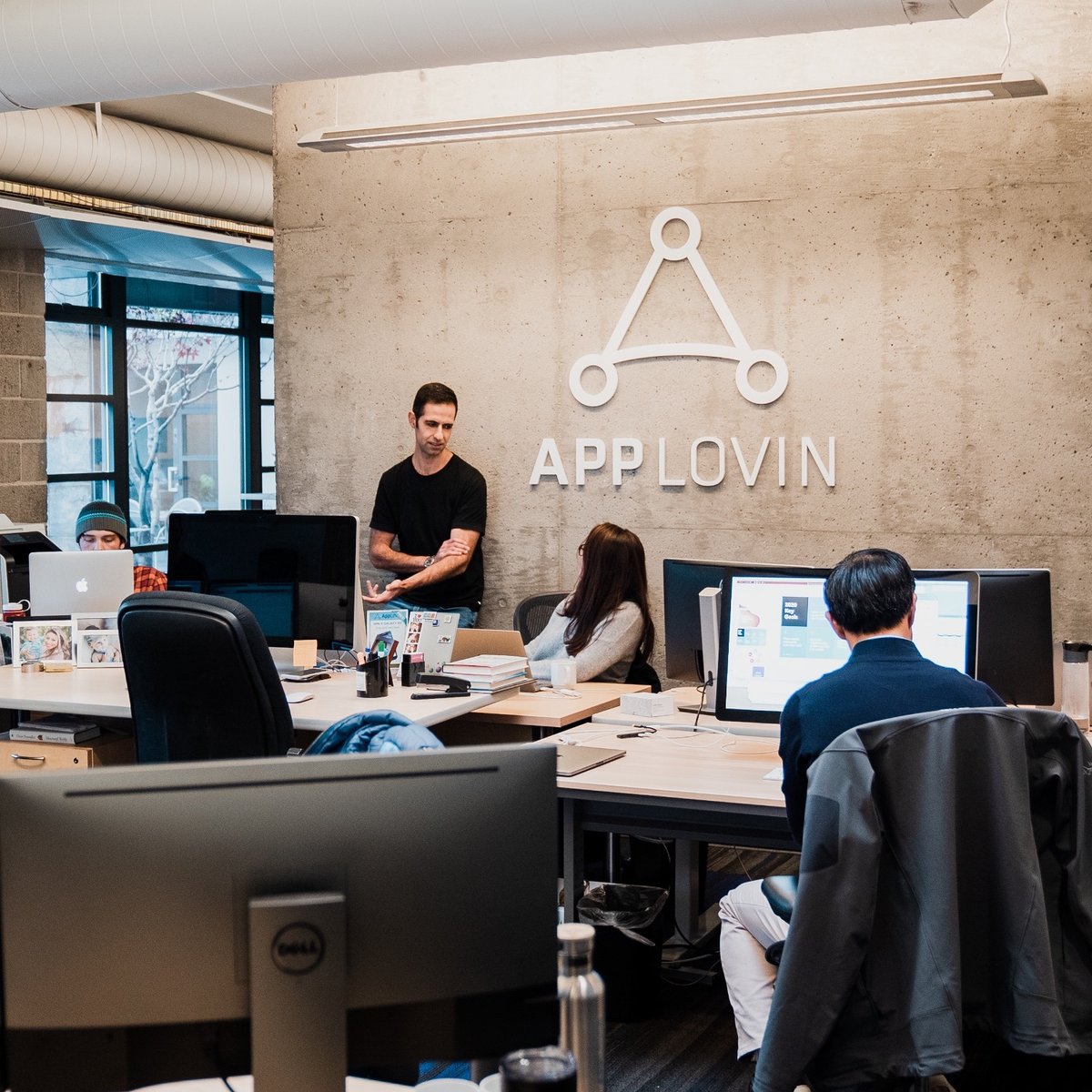 | Courtesy of AppLovin, via Silicon Valley Business Journal. 2025 archive.
AppLovin reported Q3 revenue of $2.185 billion and diluted GAAP EPS of $4.30, versus published estimates of about $2.08 billion and $4.03. It guided to Q4 revenue of $2.365 billion–$2.395 billion and adjusted EBITDA of $1.995 billion–$2.025 billion. Shares rose 71.2% for the week. Earnings comparison
The filing identifies the driver of the quarter's growth. Net revenue per installation rose 55%, while installation volume rose 2%. AppLovin's advertising tools help marketers find people likely to install and use an app. When an advertiser believes a customer will generate more value, it can justify paying more to acquire that customer. Management attributed the improvement primarily to stronger ad performance and model improvements.
The small increase in installations puts the 55% revenue gain in context. Advertisers paid more for each installation on average, so the growth depends heavily on the value they see after a user clicks. As AppLovin expands beyond its core gaming customers, it must show that those results carry over to other types of advertising.
AppLovin produced $1.84 billion of adjusted EBITDA, an 84% margin. Adjusted EBITDA excludes items including stock-based compensation, so it is not the same as cash profit. Free cash flow was approximately $1.42 billion, and the company bought back shares and withheld shares for taxes. Buybacks reduce share count, but investors still need to compare cash generation with the cost of those purchases and ongoing compensation.
The Q4 revenue midpoint implies roughly 9% growth from Q3, compared with roughly 14% growth between Q2 and Q3. Management expects higher sales, though at a slower sequential pace. After the week's sharp share-price rise, the returns advertisers see and the pace of expansion beyond gaming will shape how long investors are willing to pay for that growth.
|
|
Employers added 165,000 jobs in October.U.S. employers added 165,000 jobs in October, while unemployment fell to 4.1%. Average hourly earnings rose 0.4% from September. Hiring exceeded economists' expectations of roughly 65,000 jobs. The figures give the Federal Reserve more room to focus on inflation, while higher borrowing costs can make expansion more expensive for businesses. BLS report
|
|
Analyst moves in tech.| Stock | Firm | Rating | Target |
|---|
| AMD | UBS | Buy held | $730 → $700 | | APP | Wells Fargo | Equal Weight held | $325 → $347 | | NET | Cantor Fitzgerald | Neutral held | $340 → $310 | | AXON | JPMorgan | Overweight held | $755 → $610 |
Actions dated Nov. 6, except AMD on Nov. 4. Ratings held; targets changed. AMD · AppLovin · Cloudflare · Axon.
|
|
|
|


