TUESDAY, OCTOBER 6, 2026  /  10-MINUTE READ

CASH & CHAOS

MARKETS, MONEY AND THE MADNESS IN BETWEEN.

In partnership with

Good morning. Healthcare deal talk is sending Option Care sharply higher before the bell. Boeing has a large defense order to fill. And Lucid has fewer cars sitting around, although investors were hoping it would sell more of them. Today’s common thread: a big headline number is only the start of the story. The earnings underneath deserve a closer look.

BEFORE THE BELL

+0.22% S&P 500
7,843.25
+0.33% Nasdaq 100
31,421.50
+0.42% Dow
51,774.00

December futures · October 6, around 6:11 a.m. ET · delayed Yahoo Finance quotes; change versus prior close.

THE BIG STORY · MCK / OPCH

McKesson wants more than the drug delivery business

McKesson Medical-Surgical corporate campus

McKesson Medical-Surgical campus. Archive photo: Serijarla / Wikimedia Commons. CC BY-SA 4.0.

Option Care shareholders woke up to a potential buyer. McKesson and private-equity firm Clayton, Dubilier & Rice are nearing a deal worth more than $5 billion, including debt, according to Reuters, citing the Financial Times. An announcement could come Tuesday, although the talks could still fall apart.

Option Care was around $28.19 in premarket trading at 6:20 a.m. ET, about 20.6% above Monday’s $23.37 close, in Yahoo Finance’s delayed feed. That is the stock reacting to a report; a signed agreement and an offer price per share had not been announced at our cutoff.

What is McKesson buying into? Option Care provides infusion services at home and in outpatient facilities. This gets McKesson closer to the actual delivery of treatment, beyond supplying the drugs that make it possible. The company reported about $1.44 billion in second-quarter revenue, according to its quarterly filing.

The attraction is easy to understand. A distributor earns money moving medicine through the system. An infusion provider also has the patient relationship, clinical staff and treatment locations. Combining those activities could give the buyer a larger role in each course of care. Whether that produces better returns depends on reimbursement, staffing costs and the price paid.

The $5 billion figure needs translating. Including debt means it is a value for the business, not a cash pot to divide among common shareholders. We still need the equity purchase price, financing structure and ownership split between McKesson and CD&R. Those details determine what Option Care holders receive and what McKesson shareholders take on.

If terms arrive before the open, the per-share offer and McKesson’s funding commitment are the first numbers to check.

Read more: the reported Option Care deal →

DEFENSE · BA

Boeing has the order. Now it has to build the parts

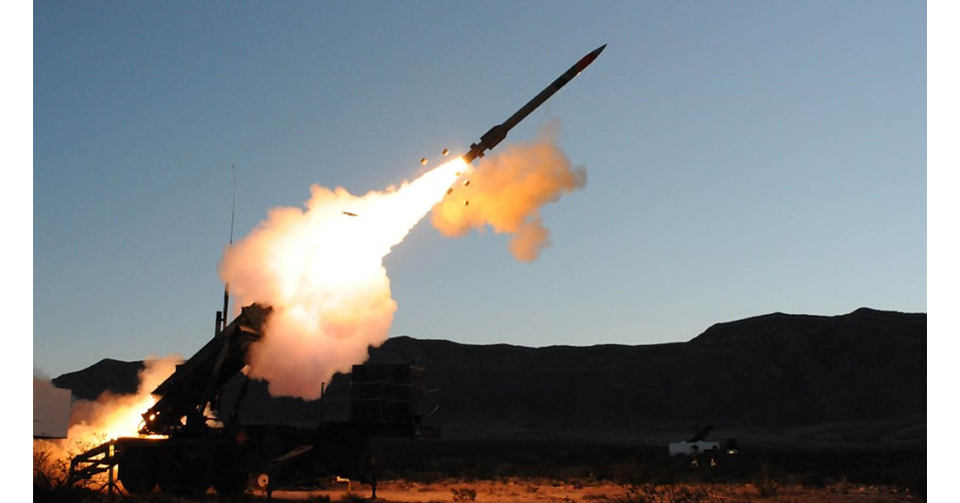
PAC-3 missile launch during a test

Photo: U.S. Army / Boeing

Boeing’s latest large award has nothing to do with getting passengers to their destination. The company received an approximately $14.7 billion contract action from Lockheed Martin to expand production of seekers for the PAC-3 Missile Segment Enhancement system. The October 5 announcement supports a seven-year effort to triple output.

The seeker is the part that helps the interceptor identify and track its target. Boeing supplies that component; Lockheed makes the broader missile system. That distinction matters when interpreting which company benefits from increased demand.

There is also some contract language worth slowing down for. This is an undefinitized contract action: work can move ahead while final terms are still being negotiated. The award is substantial, but it is not $14.7 billion of revenue booked this quarter, and it tells us nothing by itself about the eventual profit margin.

The appeal is visibility. A multiyear production commitment gives a manufacturer a reason to expand capacity, order equipment and secure suppliers. Boeing says the ramp involves its Huntsville operations and additional direct and indirect jobs. The production goal existed before this announcement; the new development is the contract supporting it.

Our read: this is encouraging for the defense business because it gives factory investment a clearer customer behind it. But investors still need to distinguish an order from the cash it generates. Equipment, materials and labor may have to be paid for before the associated deliveries are complete. Customer payment terms can make a large difference to that timing.

Boeing’s October 27 earnings report is the next checkpoint for the production schedule, investment needs and defense margins. A good order book is welcome. Executing it profitably is what shareholders ultimately get paid for.

Read more: Boeing’s missile production award →

ELECTRIC VEHICLES · LCID

Lucid cleared some inventory. Sales still disappointed

Lucid Gravity at the 2024 Geneva motor show

Lucid Gravity, 2024. Photo: Alexander-93 / Wikimedia Commons. CC BY-SA 4.0.

Lucid sold more cars than it built in the third quarter. That is helpful when inventory has accumulated. Unfortunately, it also sold fewer cars than analysts expected.

The company delivered 3,806 vehicles, against 4,687 expected in Visible Alpha’s consensus, and produced 2,954. Deliveries missed by roughly 19%, while production fell about 38% from the second quarter, Stocktwits reported via Yahoo Finance.

The difference between deliveries and production was 852 vehicles. That points to an inventory drawdown, but it is not a dollar measure of cash released. Vehicle mix, discounts, customer payment timing and the cost of those cars all affect the financial result.

Both readings can be true. Building fewer cars can stop more money getting tied up in unsold stock. Missing delivery expectations can still signal that demand is not keeping pace with investors’ hopes. Calling the lower production number either an unqualified victory or a collapse would lose half the picture.

There is a factory trade-off, too. Cutting output saves some variable costs, but rent, machinery and parts of the workforce do not disappear with each vehicle removed from the schedule. Lower production can spread those fixed costs over fewer cars. The question is whether the working-capital benefit outweighs the pressure on unit economics.

Lucid has outlined a $1.4 billion cash-flow improvement target for 2026 under its cost reset. The delivery update does not establish how much of that target has been achieved. Its November 9 financial report should provide the missing revenue, margin and cash-flow detail.

The next report needs to show whether Lucid cleared inventory without unusually heavy incentives. Selling existing stock is a sensible step. Finding enough customers for the next batch remains the harder job.

Read more: Lucid’s delivery miss →

These 7 Stocks Are Built to Outlast the Market

Some stocks are built for a quarter… others for a lifetime.

Our 7 Stocks to Buy and Hold Forever report reveals companies with the strength to deliver year after year - through recessions, rate hikes, and even the next crash.

One is a tech leader with a 15% payout ratio - leaving decades of room for dividend growth.

Another is a utility that’s paid every quarter for 96 years straight.

And that’s not all - we’ve included 5 more companies that treat payouts as high priority.

These are the stocks that anchor portfolios and keep paying.

You can download this report for free as of today, but it won’t be free forever.

This is your chance to see all 7 names and tickers - from a consumer staples powerhouse with 20 years of outperformance to a healthcare leader with 61 years of payout hikes.

THE STOCK BOARD

Where big tech finished

Monday, October 5 close · Prices in USD · Daily change. Mag 7 plus AMD, Broadcom and Micron: our editorial watchlist, not an official index.

Stock Close Monday
Apple $332.89 −0.24%
Microsoft $525.18 +1.48%
Nvidia $238.90 +2.12%
Amazon $251.40 −0.05%
Alphabet $346.47 +0.86%
Meta $741.90 +1.90%
Tesla $378.73 +2.20%
AMD $631.75 −0.34%
Broadcom $362.51 +2.08%
Micron $1,063.96 −1.02%

Tesla, Nvidia and Broadcom gained more than 2%. Micron fell about 1%, and AMD also slipped. The chip trade was not moving as one group. These are completed regular-session returns; the futures snapshot above describes a separate, later session.

AI & CAPITAL · OPENAI

OpenAI is back at the fundraising table

Greg Brockman and Sam Altman onstage at TechCrunch Disrupt in 2019

OpenAI leaders at TechCrunch Disrupt, 2019. Steve Jennings / TechCrunch. CC BY 2.0.

Another $30 billion could be heading toward OpenAI. Bloomberg reports that the company is discussing a financing round with UAE investors and BlackRock. A UAE group including MGX could contribute up to $10 billion. Talks are ongoing, so none of that should be treated as money already received.

For stock investors, the interesting part is what financing makes possible. A larger cash cushion can support spending on compute and infrastructure. It does not tell us which listed supplier wins an order, when equipment ships or how profitable the resulting contract will be.

Investment is not customer revenue. An equity check funds a business; a paying customer validates demand for its product. OpenAI needs both. Raising money can buy time to expand, but it does not remove the cost of serving users or turn infrastructure commitments into earnings.

The immediate signal is continued appetite to finance frontier AI. The more useful follow-through will be a completed round, disclosed terms and evidence that the spending it supports earns an acceptable return.

Read more: OpenAI’s funding talks →

AI INFRASTRUCTURE · FLEX

Flex’s AI business has a $2 billion vote of confidence

Data center equipment supporting AI infrastructure

Photo: Flex

Flex is giving investors a reference point for Axiom before the business trades on its own. General Catalyst, Koch Equity Development and other investors are putting in $2 billion through convertible preferred equity, at an initial $37.5 billion enterprise value. Flex plans to separate Axiom in the first quarter of 2027.

Axiom focuses on the power, cooling and compute infrastructure behind AI. The funding supports the recently announced EPC Power acquisition and the balance sheet of the planned standalone company. That gives this transaction a concrete use beyond attaching a large valuation to the AI label.

Preferred equity comes with its own terms. These investors are not simply buying the same ordinary shares that public shareholders will eventually own. Their rights and the debt included in enterprise value matter when comparing $37.5 billion with a future stock-market valuation.

Flex also has obligations if the separation is delayed beyond the agreed deadline. The transaction therefore gives the spin-off financial backing while leaving execution work for the parent.

Our read: the outside investment is a useful endorsement of Axiom’s business, but the shareholder payoff will depend on how much debt and preferred capital sit ahead of common stock after separation. The eventual balance sheet will tell us more than the headline valuation alone.

Read more: Axiom’s $2 billion investment →

MACRO IN A MINUTE

Services are growing. So is the cost pressure

September’s ISM services index came in at 54.9, down from 55.4, but still above the 50 line that separates expansion from contraction. The prices index rose to 74.0 from 72.6.

That is an awkward combination for the Fed: activity is holding up while businesses keep reporting higher costs. For shareholders, watch whether companies can pass those costs through. Revenue growth looks less impressive when wages, materials and services consume the extra dollars.

PREDICTION MARKETS

Traders still favor an October hold

Polymarket’s October Fed decision contracts priced no change at 80.5% and a quarter-point hike at 19.5% at 6:21 a.m. ET. These are market-implied prices, not a Fed forecast or a promise of what happens next.

The contracts settle against the change in the upper bound of the target rate after the October 27–28 meeting. That is narrower than asking whether borrowing costs will fall: Treasury yields and mortgage rates can rise even when the Fed stands still.

UPGRADES & DOWNGRADES

Two fresh changes from the analysts

BorgWarner (BWA): Morgan Stanley upgraded the stock to Overweight from Equalweight, with a $95 target. Monday’s close was $60.26. That is a change in recommendation, not merely a higher price target.

Schneider Electric (SBGSY): JPMorgan downgraded the company to Neutral from Overweight.

StreetInsider reported both calls Tuesday morning. These are analyst opinions, not company guidance. The original bank research notes were not publicly available for review.

CRYPTO SNAPSHOT

Crypto, briefly

Bitcoin traded around $86,063 and ether around $2,713 at 6:21 a.m. ET, according to Yahoo Finance. These are spot snapshots, separate from the stock-market returns below.

For the listed names, Coinbase rose 2.85% and Strategy gained 2.76% in Monday’s regular session. Those moves give us the equity reaction already on the board. Tuesday’s opening prices will have an additional night of crypto trading to absorb.

Forwarded this email?

Get Cash & Chaos in your inbox. And if someone you know would enjoy a market briefing without the finance lecture, send this their way. Thanks for reading — we’ll be back with the next market session.