| MONDAY, NOVEMBER 2, 2026 / 10-MINUTE READ | CASH & CHAOSMARKETS, MONEY AND THE MADNESS IN BETWEEN. | |
Sponsored by

Good morning. Marvell is making a $115 billion bet on the plumbing behind AI. Apple and Palantir report tonight, while fresh results from Estée Lauder, Marriott and Check Point offer three different readings on demand.
|
|
Marvell’s $115B Lumentum deal puts shareholders behind an AI optics bet. |  | PARADIGM Structural Engineers. Santa Clara campus, archive.
Announced November 2 · proposed all-stock acquisition
MRVL: $194.19 · −1.13% premarket. 8:07 a.m. EST; versus Friday close.
Marvell is buying more control over the connections inside AI infrastructure, with shareholders supplying the currency. Its agreement to acquire Lumentum carries a stated $115 billion enterprise value. Each Lumentum share would receive 4.5 Marvell shares; existing Marvell investors would own about 67% of the combined company.
The strategic logic is understandable. Faster chips accomplish less when moving data between them becomes the bottleneck. Marvell brings custom silicon, switching and interconnect expertise; Lumentum adds lasers, optical transceivers and specialized manufacturing. Combining the two could improve how electrical and optical components work together.
But a fixed share ratio changes the financial question. Marvell avoids funding the consideration with a giant cash payment, while existing owners surrender roughly one-third of the combined equity. Avoiding a cash bill does not make an acquisition free. The acquired earnings and technology must justify that smaller ownership percentage.
The headline valuation also needs its reference date. The issuer’s approximately $1,132 per Lumentum share and 23.9% premium use unaffected October 28 prices. The exchange ratio is fixed; the dollar value moves with Marvell’s stock. Investors should not read $1,132 as a guaranteed cash payout.
Management expects more than $1 billion in annual run-rate cost synergies and accretion to non-GAAP EPS in the first year after closing. Those are forecasts. Integration costs, customer retention and the price attached to future growth determine how much economic value remains after the announced savings.
Closing is expected in the first half of 2028, subject to shareholder and regulatory approvals. That leaves a substantial period in which both companies must execute independently. Our assessment: the industrial logic has substance, but the shareholder case rests on profitable optical growth and disciplined integration. A large addressable-market estimate cannot substitute for either.
|
|
Apple reports tonight with less tariff relief supporting margins. |  | Nils Huenerfuerst / Wikimedia Commons. Apple Park, 2024. · License
Fiscal Q4 preview · after today’s close · call 5 p.m. EST
AAPL: $345.17 · +0.16% premarket. 8:06 a.m. EST; versus Friday close.
Apple’s revenue expectations sit inside its existing growth outlook. The harder comparison is profitability. Ahead of tonight’s report, analyst revenue consensus is $112.95 billion, about 10.2% above last year. Management’s July outlook called for 9–11% growth. Adjusted EPS consensus is $1.98.
June-quarter gross margin was 50.1%, including roughly two percentage points from tariff refunds. The September-quarter guide was 47–48%, including about one point from refunds. A smaller benefit explains part of the expected decline; it does not establish that the rest of the business deteriorated by the same amount.
Management previously identified supply constraints affecting iPhone, Mac and iPad, alongside a greater memory-cost burden. Those issues hit different parts of the income statement: constrained supply can cap shipments, while expensive components absorb more revenue before it becomes profit.
The strongest counterweight is Services, which generated $30.7 billion in June. Its contribution and the mix of devices sold can help absorb hardware pressure. That makes the composition of growth more informative than a single companywide sales number.
December commentary covers holiday demand and will shape the next earnings debate. Analysts currently expect approximately $152 billion of revenue for that quarter; Apple has not issued that figure as guidance. For C&C, the important distinction tonight is between clearing the September sales bar and supporting a durable margin outlook. Strong demand helps, but availability, component costs and product mix decide how much reaches shareholders.
|
|
Palantir’s next-quarter outlook faces the more demanding test. | 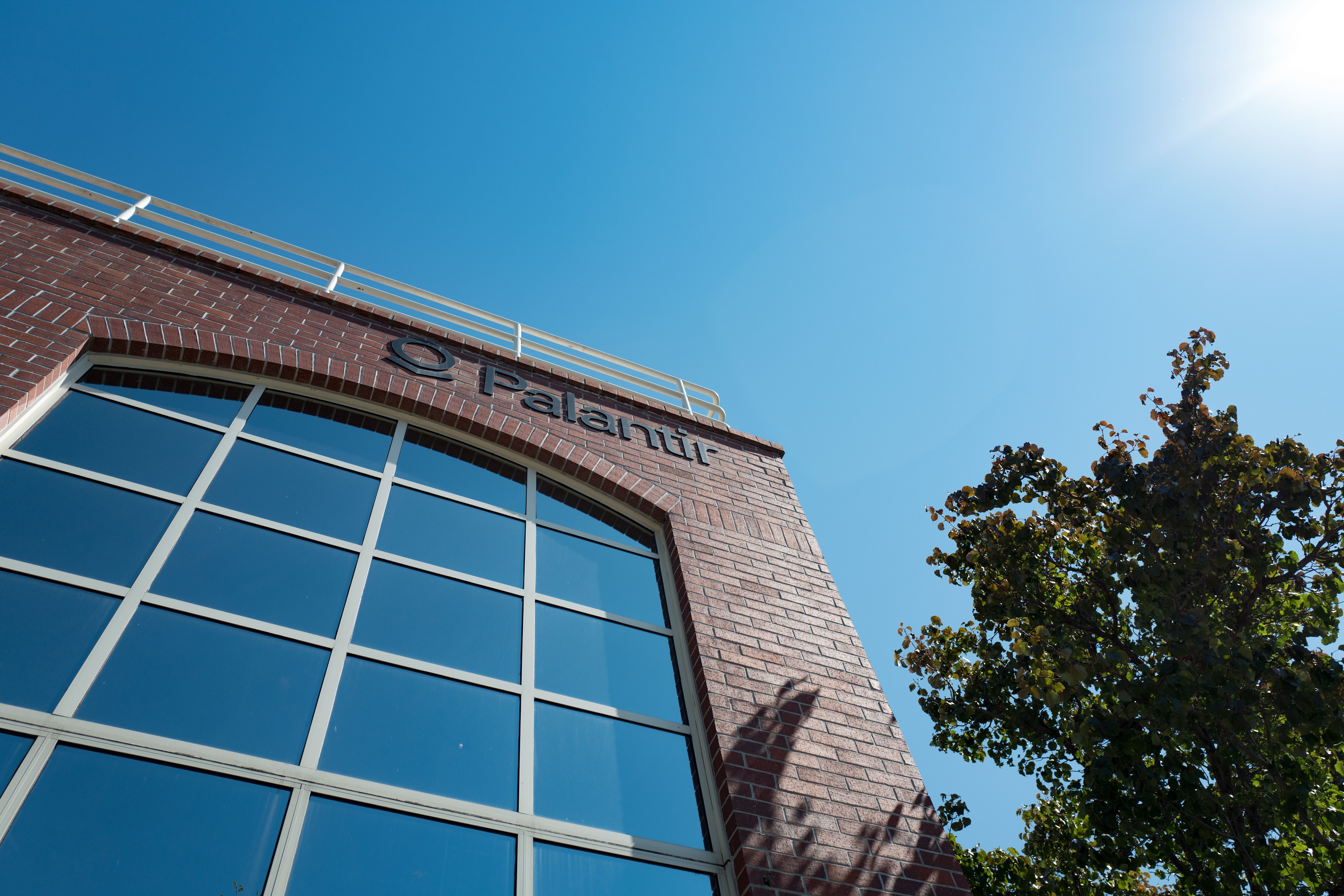 | Smith Collection / Gado / Getty Images, via Axios. Former Palo Alto office, 2020 archive.
Q3 preview · after today’s close · call 5 p.m. EST
PLTR: $186.68 · +1.40% premarket. 8:06 a.m. EST; versus Friday close.
Palantir can beat its own September guide without delivering a large surprise against analyst expectations. Management’s revenue range is $2.160–$2.164 billion. The analyst mean is $2.171 billion, only about 0.4% above the company midpoint; adjusted EPS consensus is $0.41.
The December-quarter revenue mean is approximately $2.446 billion. That shifts attention toward what management says about the next stage of growth, rather than whether the completed quarter clears a narrow numerical gap.
The business enters the report with strong evidence of demand. Q2 U.S. commercial revenue rose 149% to $764 million, while U.S. government revenue reached $809 million. Commercial expansion matters because a wider base of recurring production deployments can make growth less dependent on individual large contracts.
Profit definitions deserve attention alongside revenue. Q2’s adjusted operating margin was 62%, compared with 47% under GAAP. Both were substantial, but shareholders should understand the expenses excluded from the adjusted presentation instead of treating the two measures as interchangeable.
Palantir’s existing Q3 adjusted operating-income guide is $1.292–$1.296 billion. A higher December outlook supported by commercial growth, operating profit and cash would offer stronger evidence than a small September revenue beat alone. Conversely, impressive contract announcements would be less persuasive if implementation timing delays the sales or cash those contracts are supposed to produce.
Apple and Palantir: USD analyst means; adjusted EPS, retrieved November 2. Data provided by Zacks Investment Research, Inc., www.zacksdata.com.
|
|
Estée Lauder’s margin recovery earns a higher outlook. |  | Rathe Associates. Estée Lauder research center, Melville, archive.
Fiscal Q1 2027 results · released November 2
EL: $111.65 · +2.22% premarket. 8:00 a.m. EST; versus Friday close.
Estée Lauder’s turnaround is showing up more forcefully in profit than in sales. Fiscal first-quarter revenue rose 7% to $3.715 billion, with organic growth of 6%. Adjusted operating margin increased to 12.1% from 7.3%, and adjusted EPS reached $0.72.
That 4.8-percentage-point margin improvement means more of each sales dollar remains after operating costs. It gives the recovery more substance than a revenue increase driven entirely by currency or extra distribution would provide. GAAP operating margin also improved, to 11.0% from 4.9%.
Management raised fiscal 2027 organic sales-growth guidance to 4.0–5.5% from 3–5%, and adjusted EPS guidance to $3.20–$3.45 from $3.10–$3.35. The revision follows a stronger quarter; it remains a forecast for the year ending next June.
The improvement is uneven. Organic fragrance sales increased 20%, while organic makeup sales grew just 1%. Strong luxury fragrances therefore do not establish that every brand and category has recovered. A broader contribution would make the earnings improvement less dependent on the strongest pocket.
Cash is another useful counterweight. The company increased its annual operating-cash-flow outlook to $1.4–$1.5 billion, yet still expects less than last fiscal year because of restructuring payments and additional working capital.
Our reading: the margin recovery is real evidence of progress, while cash conversion and makeup remain unfinished work. Sales can improve before the money tied up in inventory and receivables comes home. Sustaining growth without repeatedly increasing that cash commitment would make this turnaround more valuable.
|
|
|
Elon Musk. Jensen Huang. Washington. What’s the Connection?
AI is moving into the physical economy.
Elon is building it. Jensen sees it in Agriculture. Washington is backing it. And DIT AgTech is already putting it to work in livestock.
Most investors haven’t connected the dots yet.
At $1 a share, you still can.
A CRM so smart, it updates itself.
HubSpot's CRM is so smart, it now updates itself. Calls get logged and summarized the moment they end. New leads get researched and a first outreach drafted, automatically. Deals move forward on their own, with next steps flagged before you have to ask.
Even the one repetitive task you've been meaning to fix can now run itself, no code required. Customers using it are already seeing the difference.
This isn't the CRM you have to work hard to figure out. It's the one already working before you log in.
The Mag 7 + three: where Friday left us.| Stock | Close | Friday |
|---|
| AAPL | $344.63 | −1.23% | | MSFT | $521.91 | −1.55% | | NVDA | $204.64 | −4.22% | | AMZN | $240.35 | −1.41% | | GOOGL | $279.84 | −1.40% | | META | $614.99 | −1.53% | | TSLA | $399.81 | −0.87% | | AMD | $504.80 | −10.88% | | AVGO | $326.08 | −5.48% | | MU | $884.74 | −5.30% |
USD. October 30 versus October 29 adjusted closes, excluding dividends. Ten-stock editorial watchlist, not an official index.
|
|
Marriott’s stronger room demand feeds a higher profit outlook. |  | Marriott International, via Fox Business. Bethesda headquarters, 2022 archive.
Q3 results · released November 2
MAR: $413.91 · +3.66% premarket. 8:03 a.m. EST; versus Friday close.
Marriott exceeded its previous profit guide as room demand strengthened. Adjusted EPS was $3.02, above the $2.74–$2.82 range issued in August. At constant currency, global revenue per available room, or RevPAR, grew 6.5%, including 7.4% in the U.S. and Canada.
The business mechanism matters. Higher room rates and occupancy, plus more hotels, can lift franchise and management fees without Marriott owning every building. Net fee revenue rose to $1.489 billion from $1.309 billion, roughly 14%.
The $7.005 billion headline revenue figure includes $5.080 billion of cost reimbursements. Those largely offset expenses incurred for hotel owners and other counterparties. Fee revenue provides a clearer view of the engine than treating every reimbursement dollar as equivalent to a franchise fee.
Marriott lifted its full-year RevPAR-growth outlook to 4.5–5.0% from August’s 3.0–3.5%, and adjusted EPS guidance to $12.07–$12.14 from $11.64–$11.81. The revision supports a stronger demand picture than the previous forecast.
Capital returns still carry a financing tradeoff. Marriott repurchased $1.3 billion of shares in the quarter; total debt ended September at $16.8 billion, versus $16.2 billion at year-end. The attractive fee model does not remove balance-sheet discipline from the investment case. Stronger travel spending is helping, while the cost and pace of buybacks affect how much of that improvement accrues to each remaining share.
|
|
Check Point’s subscriptions grow. Total sales still shrink. | 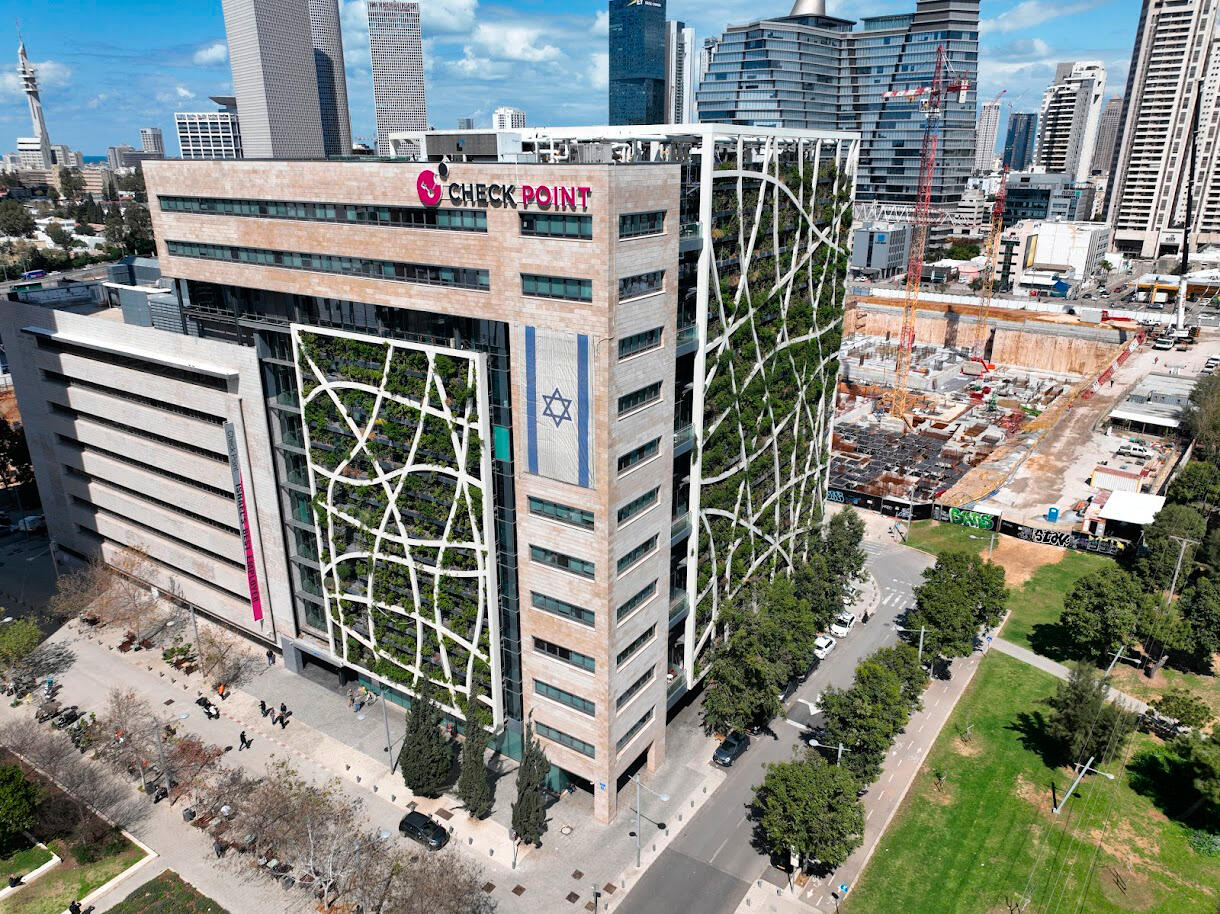 | Check Point, via CTech. Tel Aviv headquarters, archive.
Q3 results · released November 2
CHKP: $142.51 · −6.31% premarket. 8:00 a.m. EST; versus Friday close.
Check Point’s subscription growth has not yet restored companywide growth. Revenue fell 1% to $670 million even as security subscriptions increased 11% to $339 million. CEO Nadav Zafrir said management believes Q3 was the revenue trough and expects gradual improvement from Q4.
That expectation is the central operating question. A growing recurring stream is valuable, but it cannot fully offset weakness elsewhere indefinitely. Investors need the combined business to expand, rather than one successful category carrying a shrinking total.
The headline earnings decline needs a separate explanation. Non-GAAP EPS fell 37% to $2.49, but last year included a $1.47-per-share tax-settlement benefit. Excluding that benefit, the company says non-GAAP EPS increased 1%. The comparison therefore does not establish a 37% collapse in underlying earnings.
Current costs also benefited from $25 million of research-and-development grant recognition. Operating cash flow was $264 million, and company-defined adjusted free cash flow was $258 million. Those cash figures support financial resilience; they do not resolve the weak revenue trend.
C&C’s assessment is mixed: the business continues generating cash, while the promised sales recovery remains ahead. The useful test is whether subscription demand begins producing broader growth without relying on favorable tax or expense comparisons to improve the earnings narrative.
|
|
Manufacturing today. Elections tomorrow. Jobs Friday.The October ISM manufacturing report is scheduled for 10 a.m. EST today. New orders and prices separate demand growth from inflation. Services follows Wednesday at 10 a.m.
Tuesday brings the midterm elections and September JOLTS at 10 a.m. Friday’s October employment report is scheduled for 8:30 a.m. EST. Hiring and wages shape customer demand and rate expectations.
|
|
Markets price House control and December rates.Polymarket’s Democratic House-control contract was priced at 94.5%, with a 94–95¢ Yes bid/ask, in its 7:45 a.m. EST source update. Resolution follows its seat-count and caucus rules.
The December Fed contract displayed roughly 71% for a quarter-point increase and 28% for no change when checked around 8 a.m. EST. These are venue prices ahead of the December 8–9 meeting, not Federal Reserve forecasts.
|
|
|
Crypto, briefly.Bitcoin traded at $77,653.19 and Ether at $2,281.27 in Coinbase Exchange spot trades timestamped about 8:00 a.m. EST Monday. These are USD snapshots, separate from the equity closing-price table. Bitcoin · Ether.
|
|
Forwarded this email? Get Cash & Chaos in your inbox.
Independent market commentary. C&C interpretations are analysis; forecasts and analyst opinions are not guarantees.
|
|
|


