FRIDAY, NOVEMBER 13, 2026  /  MARKET EDITION

CASH & CHAOS

MARKETS, MONEY AND THE MADNESS IN BETWEEN.

In partnership with

Good morning. Jensen Huang is out, and Nvidia’s customers still need chips. The question now is who makes the deals that keep the AI buildout moving. Microsoft is fighting an outage, while Cerebras has raised its sales forecast.

What Jensen’s exit means for Nvidia and its customers.

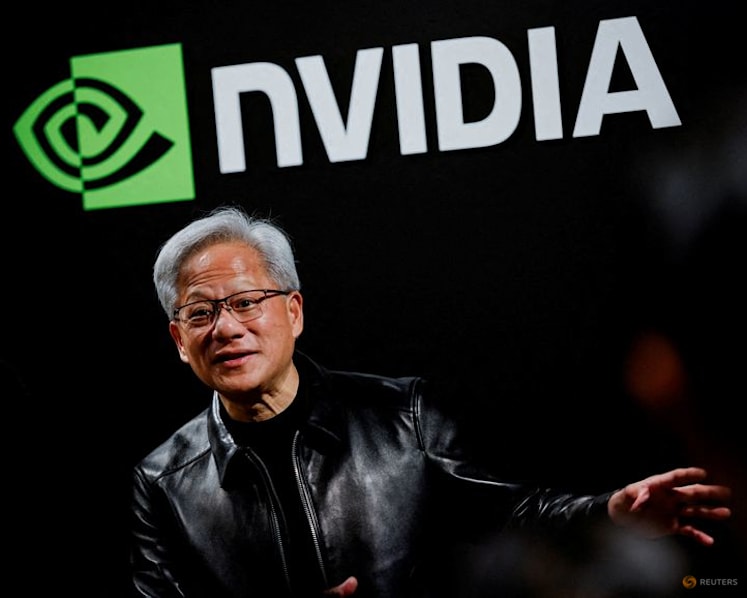
Nvidia co-founder Jensen Huang at an event

Manami Yamada / Reuters via CNA. Jensen Huang, archive.

NVDA $168.14 · +1.17% premarket. 7:42 a.m. ET Friday, versus Thursday’s close.

Nvidia opened Thursday at $151.00 and closed at $166.19, down 4.34% after Jensen Huang resigned. Buyers lifted it well off the open. The bigger test is whether customers, suppliers and financiers continue to make the same commitments without him.

Colette Kress, Nvidia’s CFO since 2013, is interim CEO while the board searches for a permanent leader. Nvidia says it expects customer commitments and its product roadmap to continue without interruption. That is the board’s stated position, not a guarantee about every future order or investment.

The bigger question is how Kress and the eventual permanent CEO approach new deals. Reuters reports that Kress questioned some of Huang’s riskier bets. A more selective approach could make it harder for smaller cloud companies to fund expansion, even if Nvidia honors its existing commitments.

That matters because Nvidia does more than sell processors. It also invests in, lends support to or buys cloud services from companies building AI infrastructure. Its fiscal Q2 filing listed $99 billion in equity investments, $25 billion in equity investment commitments and $36 billion in AI cloud agreement commitments. They are distinct exposures, not a single cash bill.

For cloud providers, Nvidia’s backing can help secure equipment and financing before rental revenue arrives. The benefit to Nvidia is a larger market for its systems and access to computing. The risk is greater exposure if a partner struggles to fund facilities or fill its servers. The economics depend on each contract.

Rivals could benefit if customers diversify, but a higher share price does not prove orders have moved. AMD’s data-center revenue rose 97% to $8.5 billion last quarter, including CPUs and accelerators. Its own growth was underway before the succession crisis.

The governance questions have not ended. Huang acknowledged being unfaithful to his wife after reporting about Alice Huang, an executive U.S. officials suspect of links to Chinese intelligence. The New York Times separately reported a relationship with an Nvidia executive. Reuters then reported a relationship with another Nvidia employee, citing two people familiar with the matter. Nvidia opened an independent investigation; its board earlier said it had no reason to believe company or national-security secrets were compromised.

Kress gets her first earnings-stage test November 17. Last quarter Nvidia reported $96.2 billion in revenue, including $89 billion from data centers. Its prior Q3 revenue outlook was $108 billion, plus or minus 2%. The report covers a period before Huang resigned, so any effects on future orders will take longer to appear.

Reuters on the additional allegation · Reuters on Kress.

Read Nvidia’s leadership announcement →

Microsoft’s outage shows how much runs on its email.

Microsoft Building 92 in Redmond

Coolcaesar / Wikimedia Commons. Microsoft Building 92, archive.

MSFT $517.54 · −1.04% premarket. 7:42 a.m. ET Friday, versus Thursday’s close.

Microsoft is still working to restore services after a widespread Microsoft 365 outage disrupted Outlook email and functions connected to Teams and Copilot. The problems began Thursday and carried into Friday, affecting businesses and government agencies across multiple regions.

Exchange Online sits behind business mailboxes and calendars. When it struggles, the problem can spread beyond the inbox: Teams scheduling and other services that rely on Exchange can also be affected. Reuters reported disruptions to Microsoft 365 connectors used by OpenAI and Anthropic. A connector outage does not mean either company’s entire AI service stopped working.

Microsoft said recovery work had produced early improvements in stability and capacity, according to AP. It had not declared the disruption fully resolved. The company said it had no indication of malicious activity and was still investigating the cause.

The business context is substantial. Microsoft 365 commercial cloud revenue increased 17% in the latest quarter on a reported basis. The broader Microsoft Cloud, which includes Azure and other products as well as commercial Microsoft 365 cloud services, generated $63.9 billion. Those are different measures, and neither tells us the outage’s financial cost.

Subscription contracts mean a few hours of disruption do not automatically erase a quarter of revenue. For customers, though, time lost can affect operations immediately. For Microsoft, the longer-term questions are service reliability, any applicable customer credits and whether the incident affects renewals. No company-wide financial impact has been quantified.

The outage is also a reminder that cloud products are connected. Businesses may buy email, collaboration tools and AI features as separate services, yet rely on shared infrastructure underneath. Restoring one feature is progress, not proof that every affected service is back.

AP on the outage · Microsoft’s latest results.

Check Microsoft’s service status →

Cerebras lifts its outlook as losses widen.

Cerebras Systems logo

Cerebras Systems logo / Wikimedia Commons.

Cerebras reported third-quarter GAAP revenue of $210.8 million and a loss of $0.67 per share. Core revenue was $230.9 million, versus the $214.7 million LSEG estimate reported by CNBC. Core earnings were $0.13 per share, versus a Zacks estimate for a $0.13 loss. For Q4, it forecasts $310 million to $330 million in core revenue.

CBRS $110.43 · +12.97% premarket. 7:42 a.m. ET Friday, versus Thursday’s close.

MetricReportedEstimate / guidance
Q3 GAAP revenue$210.8M
Q3 core revenue$230.9M$214.7M
Q3 core EPS$0.13−$0.13
Q3 GAAP EPS−$0.67
Q4 core revenue$310M–$330M

Revenue estimate: LSEG via CNBC. EPS estimate: Data provided by Zacks Investment Research, Inc., www.zacksdata.com. Q4 figures are company guidance.

Full-year core revenue guidance is now $940 million to $960 million, up from $880 million to $890 million. The midpoint increase is about 7%. Investors are buying a faster ramp in computing demand, particularly for inference, the work an AI model performs when it generates an answer.

The accounting needs a closer look. Cerebras recorded a $161.2 million GAAP net loss, compared with a $22.2 million loss a year earlier. Its core measure showed $29.8 million in net income. GAAP gross margin was 20%, while core gross margin was 41%.

The company removes several items from core results, including stock-based compensation, customer warrant amortization and certain pass-through costs. For revenue, it subtracts $16.4 million in pass-through sales and adds back $36.4 million of customer warrant amortization. Warrants can give customers the right to acquire shares, making them relevant to shareholders even when they are noncash.

Cerebras reported $26.1 billion in remaining performance obligations. That is business under contract for future delivery, not revenue collected this quarter. Reuters reported that CEO Andrew Feldman identified Microsoft as a new cloud partner, with further details expected next year.

There is a catch in the backlog. Management said initial capacity for OpenAI is behind schedule and it deducted estimated delay credits from remaining performance obligations. It expects cloud revenue to be roughly flat in Q4 because capacity is constrained; hardware shipments account for the expected jump in total core revenue.

The upside is that demand and the raised forecast support a faster buildout. The question is how much of that contracted work becomes cash, what it costs to deliver and how much dilution accompanies customer agreements.

Read the company’s results →

The 5 Stocks Nvidia Can't Grow Without

Every Nvidia chip needs servers, networking, power and a data center to run. Analysts say the smaller companies supplying those pieces have more room to grow, with price targets up to 55%. Get all five tickers texted to you free today.

A CRM so smart, it updates itself.

HubSpot's CRM is so smart, it now updates itself. Calls get logged and summarized the moment they end. New leads get researched and a first outreach drafted, automatically. Deals move forward on their own, with next steps flagged before you have to ask. 

Even the one repetitive task you've been meaning to fix can now run itself, no code required. Customers using it are already seeing the difference. 

This isn't the CRM you have to work hard to figure out. It's the one already working before you log in.

Cisco raises its AI forecast as cloud orders grow.

Cisco campus in San Jose

Prayitno / Wikimedia Commons. Cisco campus, archive.

Cisco reported fiscal Q1 revenue of $18.52 billion and adjusted EPS of $1.40, ahead of approximately $18.11 billion and $1.32 in estimates cited by Investing.com before results. Its fiscal Q2 outlook calls for revenue of $18.0 billion to $18.2 billion and adjusted EPS of $1.34 to $1.36.

CSCO $98.18 · −3.76% premarket. 7:41 a.m. ET Friday, versus Thursday’s close.

MetricReportedEstimate / guidance
Q1 revenue$18.52B$18.11B
Q1 adjusted EPS$1.40$1.32
Q2 revenue guide$18.0B–$18.2B
Q2 adjusted EPS guide$1.34–$1.36

Estimates from Investing.com’s November 9 preview. Q2 figures are company guidance.

The company now expects $9 billion in fiscal 2027 AI infrastructure revenue from hyperscalers, up from its prior $7.5 billion forecast. Cisco sells the networking gear that connects servers and moves data through giant computing clusters. More AI chips require networks capable of keeping them supplied with data.

The $9 billion is a forecast for revenue, not a tally of cash already in the bank. Cisco also reported $46.2 billion in remaining performance obligations, up 8%. That captures contracted business expected to be recognized over time, while orders and quarterly revenue measure different stages of a sale.

Total quarterly revenue grew 24%, while adjusted EPS increased 40%. Operating cash flow rose to $4.4 billion from $3.2 billion. Cisco returned $3.7 billion through dividends and repurchases, evidence that its established businesses are funding shareholder returns while it expands into AI networks.

Management raised its full-year revenue outlook to $74.8 billion to $75.8 billion and adjusted EPS guidance to $5.47 to $5.53. Adjusted gross margin fell to 65.6% from 68.1% a year earlier. For the next quarter, Cisco forecast 65% to 66%, as its mix of networking equipment, software and services affects how much of each sales dollar remains after direct costs.

Cisco also sells networking and security products to businesses outside the AI industry.

Read the company’s results →

Applied Materials sells the machines behind the chip boom.

Applied Materials building in Santa Clara

Olaf2 / Wikimedia Commons. Applied Materials, archive.

Applied Materials reported fiscal Q4 revenue of $10.41 billion and adjusted EPS of $4.16, ahead of Zacks estimates of about $10.30 billion and $4.06. For fiscal Q1, management forecast revenue of $11.1 billion, plus or minus $500 million, and adjusted EPS of $4.35, plus or minus $0.20.

AMAT $378.56 · −0.63% premarket. 7:42 a.m. ET Friday, versus Thursday’s close.

MetricReportedEstimate / guidance
Q4 revenue$10.41B~$10.30B
Q4 adjusted EPS$4.16$4.06
Q1 revenue guide$10.6B–$11.6B
Q1 adjusted EPS guide$4.15–$4.55

Estimates: Data provided by Zacks Investment Research, Inc., www.zacksdata.com. Q1 figures are company guidance.

The company makes equipment used by chip manufacturers to build, modify and inspect semiconductor wafers. Its customers buy machines when they plan to add capacity or adopt more advanced production techniques. That makes Applied a useful check on what chipmakers are spending, even though it is one step removed from the businesses buying AI computing.

Revenue increased 53% from a year earlier and adjusted EPS rose 92%. Quarterly free cash flow reached $2.6 billion. Applied said it returned more than $2.4 billion to shareholders, including its largest quarterly buyback in more than eight years.

The growth reflects strong semiconductor investment, including memory and advanced chipmaking. Demand for AI servers can lift several categories of equipment, from tools used to make memory to machinery used in advanced packaging. These orders depend on customers’ expansion plans and delivery schedules rather than a direct sale to an AI app developer.

There is a difference between a chipmaker buying equipment and that chipmaker earning a return on it. Strong orders show confidence in future capacity. They do not prove every data center will be full or every AI model will be profitable.

The next-quarter guidance points to another step up from the $10.41 billion just reported. Investors should watch whether customers sustain the spending, how quickly Applied can deliver the equipment and whether margins hold as its product mix changes.

Read the company’s results →

Nu grows lending. Late payments rise too.

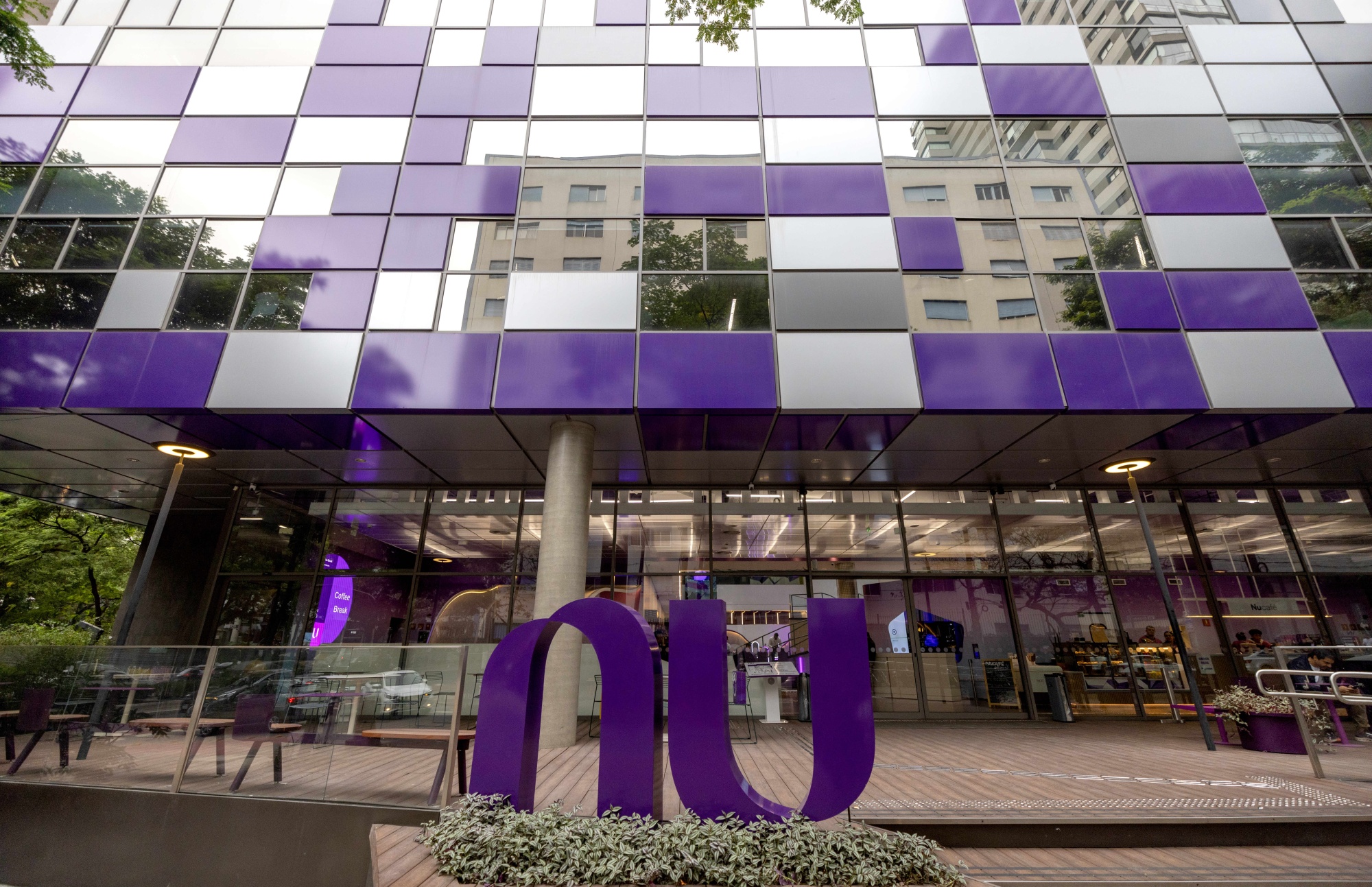
Nubank headquarters in São Paulo with Nu logo

Nubank headquarters, São Paulo; archive via Bloomberg.

Nu reported third-quarter IFRS revenue of $5.82 billion and adjusted EPS of $0.22, versus Zacks estimates of $5.70 billion and $0.22. It improved its full-year efficiency outlook to 19%–19.5%, from about 20%, as its customer base and loan book expanded.

NU $12.32 · +4.14% premarket. 7:41 a.m. ET Friday, versus Thursday’s close.

MetricReportedEstimate / guidance
Q3 IFRS revenue$5.82B$5.70B
Q3 adjusted EPS$0.22$0.22
2026 efficiency outlook19%–19.5%

Q3 estimates: Data provided by Zacks Investment Research, Inc., www.zacksdata.com. Efficiency ratio is company guidance.

The Latin American digital bank added 3.7 million customers to reach nearly 143 million. Its credit portfolio grew 33% year over year on a currency-neutral basis to $41.6 billion. Deposits rose 19% to $47.5 billion, providing funding for its loans.

The payoff is visible in profit: net income reached $1.1 billion, up 31% on a currency-neutral basis, and return on equity was 32%. Nu’s separate managerial gross revenue measure was $6.3 billion; it uses a different definition from the $5.82 billion IFRS revenue compared with estimates above.

Credit quality deserves attention. Loans more than 90 days overdue rose to 7.3% of the portfolio from 6.9% in the previous quarter. The 15-to-90-day measure rose to 4.9% from 4.8%. Faster lending can raise interest income, but late payments can eventually require more credit-loss provisions.

The lower efficiency-ratio outlook means Nu expects operating costs to consume a smaller share of revenue than previously forecast. Some expenses moved into Q4, however, and the company expects the ratio to rise sequentially. Growth in deposits and customer activity helps, but those gains still have to cover the cost of extending credit.

Read the company’s results →

Forwarded this email? Get Cash & Chaos in your inbox.