| WEDNESDAY, OCTOBER 28, 2026 / 10-MINUTE READ | CASH & CHAOSMARKETS, MONEY AND THE MADNESS IN BETWEEN. | |
In partnership with

Good morning. The AI buildout is producing extraordinary profits for suppliers—and extraordinary bills for their customers. SK Hynix, GE Vernova and Vertiv have fresh results. Tonight, Google and Microsoft show how much of that investment is reaching earnings and cash.
Also inside: Robinhood’s uneven revenue mix, Nvidia and Oracle’s expansion, and Visa’s customer-incentive bill. Research refreshed at 7:45 a.m. ET; the scoreboard uses Tuesday’s closes.
|
|
SK Hynix’s 80% margin shows who is collecting the AI bill. |  | Yonhap, via The Korea Times. Icheon, 2024 archive.
SK Hynix’s memory pricing is rising faster than shipments—and the difference is flowing into profit. Wednesday’s Q3 results delivered ₩104.6 trillion of revenue and ₩83.3 trillion of operating profit, a roughly 80% operating margin. Both were quarterly records.
Revenue rose 32% from Q2; operating profit rose 38%. The call explains why: DRAM shipments increased about 10%, while average selling prices climbed in the high-20% range. NAND shipments actually declined slightly, missing the earlier low-single-digit growth expectation, but prices rose in the mid-20s as enterprise SSDs improved the mix.
That distinction matters for Micron and Sandisk investors. The read-through is stronger memory pricing and richer products, not uniform shipment growth. Their product mixes and costs differ, so SK Hynix’s margin cannot simply be copied across competitors.
Management expects HBM4 to overtake HBM3E in volume and revenue in Q4. Long-term agreements cover more than half of 2027–28 capacity, strengthening demand visibility. But their pricing reflects market conditions; they do not lock in today’s margins.
Net profit fell 58% sequentially to ₩39.8 trillion, distorted by investment and foreign-exchange movements. That is a different story from operating performance. Our reading: scarcity is producing exceptional earnings, while heavier investment and eventual supply additions remain the challenge to sustaining them.
|
|
Robinhood’s record revenue did not produce higher earnings. |  | Robinhood. Toronto office opening, September 2026.
Robinhood diversified away from crypto just in time—but higher revenue still failed to become higher adjusted profit. Q3 revenue reached a record $1.424 billion, up 12%. Adjusted net income slipped 3% to $550 million; adjusted EPS fell 3% to $0.60.
The revenue bridge is revealing. Event-contract revenue exceeded six times its year-earlier level at $173 million, overtaking crypto’s $120 million after a 55% decline. Options revenue rose 31% to $399 million and equities rose 41% to $121 million. Those gains cushioned the crypto slump.
Yet net interest revenue fell 9% to $415 million: larger customer balances could not fully offset lower rates and weaker securities lending. GAAP operating expenses rose 16%, faster than sales. Credit-card loss provisions and investment in new products also deserve attention alongside trading activity.
Gold subscribers reached 5.2 million, reinforcing the longer-term case for deeper customer relationships. But diversification does not make every revenue stream recurring: trading, event contracts and interest income remain sensitive to activity or rates.
October’s $13 billion of net deposits includes a $6 billion Dell gift for Trump accounts; it is not all ordinary retail inflow. Management also said October trading volumes per day were about 5% below Q3 across equities, options and crypto. New products are broadening the business; sustainable operating leverage still needs to follow.
|
|
GE Vernova’s $197 billion backlog comes with cash—and obligations. | 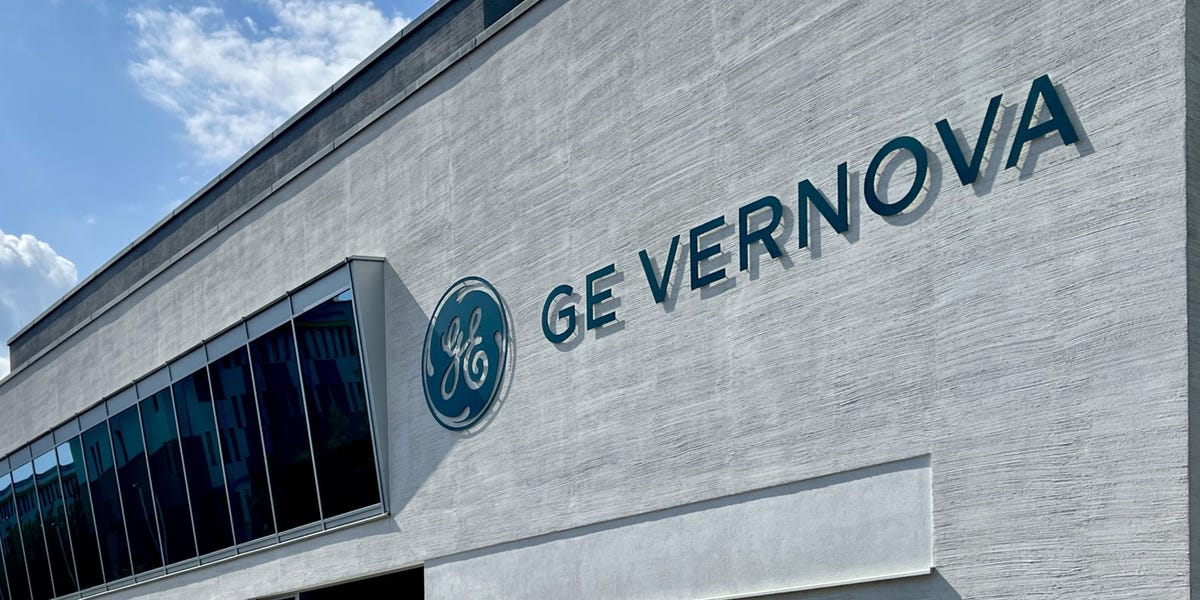 | GE Vernova, via Recharge. Archive.
GE Vernova’s strongest improvement is in delivered power-equipment profitability, not just another large order number. Power revenue rose 25%, and its EBITDA margin reached 21.4%. In July, management had guided to 17–19% growth and a 17–18% margin for Q3.
Higher prices and shipments outweighed inflation. Across the group, revenue reached $12.6 billion, up 27%; organic growth was 18%. Electrification’s 51% reported growth included Prolec GE, with organic growth of 16%. Acquisition growth and underlying demand are not interchangeable.
Orders reached $29.3 billion and backlog $197 billion. The 122-gigawatt gas pipeline includes 64 GW of orders and 58 GW of slot reservations. Converting 13 GW of reservations into orders during Q3 is stronger evidence than treating the whole pipeline as guaranteed sales.
Free cash flow reached $5.4 billion, helped materially by working capital as well as earnings. Customer downpayments finance production before delivery; they bring future obligations, so this quarter’s cash should not be annualized as recurring profit.
Management raised its 2026 free-cash-flow range to $16–$17 billion from $11.5–$12.5 billion. The separate $9 billion Trench purchase is expected to close in late 2027. Today’s operating improvement is substantial; acquisition execution and still-loss-making Wind remain counterweights.
|
|
Vertiv turns its backlog into a much stronger quarter. |  | Vertiv headquarters, via DKSH. Archive.
Vertiv delivered well beyond the acceleration it promised in July. Q3 sales reached $4.313 billion, versus its earlier $3.75 billion guidance midpoint. Organic growth was 55%, against roughly 35% expected; adjusted EPS reached $2.21 versus a $1.80 midpoint.
Power and cooling demand is becoming shipments. Higher volume, pricing and operating execution helped adjusted operating profit rise 83%, faster than revenue’s 61% increase. The adjusted operating margin expanded 2.9 percentage points to 25.2%. Acquisitions contributed about six points of revenue growth.
The distinction from merely accumulating orders matters. Equipment must be built, installed and supported; Vertiv’s service network strengthens that offering, but delayed customer projects can still move revenue between quarters.
Adjusted free cash flow rose 50% year over year to $652 million, although it was below Q2’s $925 million. Advance payments and collection timing can move cash differently from earnings.
The full-year adjusted-EPS midpoint increased to $7.15 from $6.70. Q4 guidance calls for about 50% organic sales growth. That is a stronger operating trajectory, with the burden now on factory capacity and delivery schedules to sustain it.
|
|
|
Speak naturally. Send without fixing.
Wispr Flow turns your voice into clean, professional text you can send the moment you stop talking. No rough transcription you have to clean up. Actual polished text, ready for email, Slack, or any app.
Speak the way you think. Go on tangents. Change your mind mid-sentence. Flow strips the filler, fixes the grammar, and gives you text that reads like you spent five minutes writing it.
The Mag 7 + three: Tuesday’s close.AMD led this watchlist; Meta declined. SPY gained 0.56% and QQQ rose 1.27%. ETF price returns, not index returns.
| Stock | Close | Tuesday |
|---|
| AAPL | $347.10 | +0.93% | | MSFT | $531.33 | -0.24% | | NVDA | $217.94 | +0.90% | | AMZN | $253.10 | +1.61% | | GOOGL | $320.58 | +1.19% | | META | $620.19 | -1.64% | | TSLA | $407.46 | +4.04% | | AMD | $560.26 | +5.45% | | AVGO | $342.33 | +4.00% | | MU | $928.76 | +2.77% |
October 27 regular-session adjusted closes versus October 26. Returns calculated before rounding. C&C editorial watchlist, not an official index; not today’s earnings reactions.
|
|
Google and Microsoft: follow AI revenue all the way to cash. |  | Coolcaesar / Wikimedia. Redmond, 2016. · Creative Commons license
Tonight’s test is whether AI monetization is catching up with the cost of supplying it. Alphabet reports calendar Q3; Microsoft reports fiscal Q1 2027. Both periods ended September 30. Alphabet’s call is at 4:30 p.m. ET; Microsoft’s at 5:30 p.m.
Google: more queries must become profitable advertising. Last quarter, Search revenue grew 17% and YouTube ads 13%. For Q3, query growth alone is insufficient: commercial intent, paid clicks and advertiser pricing determine revenue, while traffic-acquisition payments and AI serving costs determine how much stays with Google. The company does not disclose a separate AI-ad profit line. Zacks expects $2.94 adjusted EPS and $111.85 billion of revenue excluding traffic-acquisition costs; that revenue estimate must not be compared directly with Alphabet’s gross reported sales.
Cloud deserves the same scrutiny. Q2 revenue grew 82% to $24.8 billion, partly including newly recognized TPU-system deliveries. Hardware deliveries and recurring cloud usage have different revenue timing. Management warned that renting third-party computing capacity would modestly pressure near-term Cloud margins while its own infrastructure catches up.
Alphabet’s Q2 cash generation already fell short of investment: $39.1 billion of operating cash against $44.9 billion of capex. Depreciation rose about 42%; investment gains also inflated headline EPS. Strong Cloud growth can coexist with weaker cash flow. The prior results make operating profit and cash more informative than an unadjusted EPS comparison.
Microsoft: consumption, subscriptions and a spending bill above $50 billion. Its revised guide calls for Azure growth of 44–45% in constant currency. New capacity becomes revenue only as customers use it; Copilot subscriptions add revenue through paid seats and product mix, but also require inference compute.
The revised revenue guide is $89.85–$90.95 billion. Zacks consensus is $90.58 billion and $4.71 adjusted EPS. Microsoft expects quarterly capex above $50 billion including finance leases—a different measure from cash purchases alone.
Microsoft also recast its segments and product definitions. Its longer estimated building lives affect depreciation and lease classification, not GPU lifetimes or the underlying cash commitments. The stronger result would combine sustained growth with evidence that revenue is covering the growing infrastructure burden.
Consensus dates: Microsoft revenue October 22/EPS October 23; Alphabet revenue October 26/EPS October 20. Rechecked today. Data provided by Zacks Investment Research, Inc., www.zacksdata.com.
|
|
Nvidia and Oracle expand capacity. Utilization determines the payoff. |  | Coolcaesar; edit by Jacek Halicki / Wikimedia. Archive. · Creative Commons license
Nvidia and Oracle are expanding Vera Rubin infrastructure to multi-gigawatt scale. Tuesday’s announcement also brings Vera CPUs to Oracle Cloud Infrastructure. It expands the available platform; it does not disclose a new dollar-valued customer contract.
The financial effects arrive differently for each company. Nvidia benefits as systems ship. Oracle must turn installed capacity into paid cloud usage while funding equipment, power and operations. More efficient allocation of CPU and GPU resources could improve utilization, but the announcement does not quantify a realized margin benefit.
Oracle’s latest quarterly release illustrates the financing burden: $23 billion of operating cash flow still left roughly $5 billion of negative free cash flow after capital investment. Customer prepayments support cash collection before services are delivered.
That creates useful financing capacity and a delivery obligation. The expansion strengthens Oracle’s product offering; profitable utilization, rather than installed megawatts alone, determines the eventual shareholder return.
|
|
Visa’s spending growth meets a bigger customer-incentive bill. |  | Visa regional headquarters, Dubai. Photo via Guardian Glass.
Visa’s payment engine remains resilient, but not every extra dollar of activity reaches net revenue. Fiscal Q4 revenue rose 13% to $12.14 billion, supported by 9% payment-volume growth, 14% cross-border growth excluding intra-Europe, and 10% more processed transactions.
Pricing and value-added services help revenue outgrow basic payment volumes. Client incentives work in the opposite direction: they rose 21% in Q4. These payments help win and retain bank and merchant relationships, reducing the revenue Visa keeps.
Management expects roughly 25% of payment volume to come up for renewal in fiscal 2027, versus 20% in 2026, putting further upward pressure on incentives. Its low-double-digit adjusted revenue-growth outlook therefore includes both healthy demand and a larger retention bill.
Adjusted net income grew 13%, while adjusted EPS rose 17% to $3.48, helped by fewer shares. The business is growing; buybacks amplify the per-share result. Sustaining margins requires pricing and services growth to cover incentives and reinvestment, rather than relying solely on spending volumes.
|
|
Today’s calendar: the Fed, then Big Tech.Wednesday, October 28 · All times ET. The Fed decision is scheduled for 2 p.m., followed by the press conference at 2:30 p.m. Google and Microsoft report after the close. Their calls begin at 4:30 p.m. and 5:30 p.m., respectively. These events were still ahead at our cutoff.
|
|
Prediction markets favor a hold.The October Fed contract showed approximately 95% for no change at 7:48 a.m. ET. These are market-implied probabilities, not a Fed forecast. A hold would still leave the statement and press conference capable of changing expectations for December.
|
|
Visa’s target moves higher.JPMorgan raised Visa’s price target to $455 from $450, according to October 28 reporting. This is a target revision, not evidence of a rating upgrade. The new target is about 13% above Visa’s $401.86 Tuesday close; it remains an analyst opinion.
|
|
Crypto, briefly.Bitcoin: about $81,262. Ether: about $2,362. Coinbase USD spot snapshots at 7:51 a.m. ET, October 28. Spot levels, not daily returns.
|
|
Forwarded this email? Get Cash & Chaos in your inbox.
Independent market commentary. Company forecasts and analyst estimates are not guarantees; C&C interpretations are analysis.
|
|
|


