| SUNDAY, NOVEMBER 8, 2026 / 12-MINUTE READ | CASH & CHAOSMARKETS, MONEY AND THE MADNESS IN BETWEEN. | |
Sponsored by

Good morning. The AI selloff has left investors with a question that will run through this week’s earnings: how quickly can companies turn billions of dollars of infrastructure spending into revenue and cash?
CoreWeave, Nebius, Cisco and Applied Materials report at different points in that chain. Berkshire Hathaway has already reported, and Constellation Energy opens the week with a look at the power behind the buildout.
|
|
CoreWeave’s $104 billion backlog meets its financing bill. | 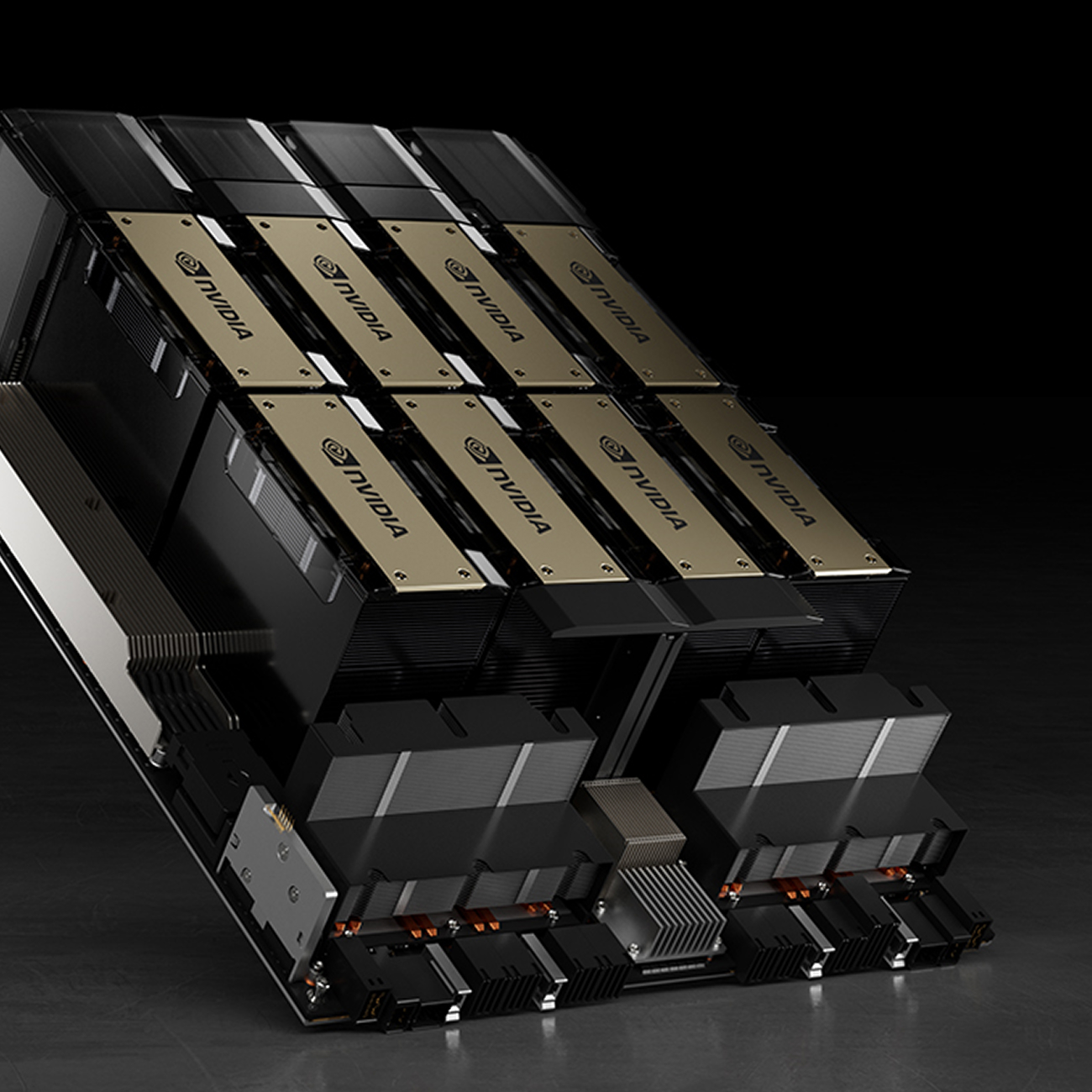 | CoreWeave. AI computing hardware, archive.
CoreWeave reports Q3 results Tuesday after the close; its earnings call is at 5 p.m. ET.
| Metric | Zacks est. | Prior guidance |
|---|
| Q3 revenue | $3.54B | $3.45B–$3.60B | | Q3 adjusted EPS | −$1.17 | — |
Revenue estimate last changed Oct. 28; EPS estimate Oct. 27. Data provided by Zacks Investment Research, Inc., www.zacksdata.com.
CoreWeave previously forecast full-year capital spending of $35 billion–$39 billion. The analyst revenue estimate would be a large jump from the company’s $2.58 billion of Q2 revenue. The more consequential question is how much it costs to get customers onto the capacity they have reserved.
CoreWeave rents specialized computing infrastructure to customers building and running AI models. Its reported backlog was approximately $104 billion at June 30, excluding more than $25 billion in additional commitments signed early in Q3. Those figures indicate customer demand, but the company defines backlog partly as estimated future revenue under contracts subject to service and delivery requirements. The money is not all cash collected today.
Building the systems requires spending before customers can use them. CoreWeave’s filing says it funds servers, networking equipment and infrastructure using a mix that includes debt, equity, financing facilities and existing cash. In Q2, net interest expense reached $640 million, compared with $267 million a year earlier. The company recorded a $49 million operating loss under GAAP even as revenue more than doubled.
There is a strong case for the investment: if CoreWeave puts its contracted equipment into service on schedule and customers use it as agreed, revenue can grow into spending already made. Management has also described demand as strong enough to support expanded capacity. Conversely, a full backlog does not eliminate construction delays, financing costs or the risk that customers’ needs change. The timing of delivery matters to both sides of the calculation.
A faster revenue ramp would help. So would a clearer path from operating cash to the next round of capital spending. Tuesday’s report gives investors a chance to compare new capacity, backlog conversion and the funding required to keep expanding—not just the size of the next contract.
|
|
Berkshire bought back $9.6 billion of stock as operating profit fell. |  | Good-investing / Wikimedia Commons. Berkshire Hathaway annual meeting, 2025 archive. · License
Berkshire Hathaway reported third-quarter revenue of $105.65 billion, above the $100.93 billion estimate reported by Investing.com, and GAAP earnings of $10.33 per Class B share on Saturday. Operating earnings fell to $12.71 billion from $13.49 billion a year earlier. Berkshire does not give quarterly earnings guidance. Its Class B shares closed Friday at $570.89, before the results.
The headline profit includes gains and losses on Berkshire’s investments, even when the company has not sold the holdings. Those market movements can make reported net income move sharply from one quarter to the next. Berkshire’s operating earnings strip out those investment gains and provide another view of its insurance, railroad, energy and other businesses.
Insurance was a weak spot. AP reported that underwriting profit across Berkshire’s insurers fell to $1.35 billion from $2.37 billion. Geico accounted for much of the decline, earning $982 million from underwriting versus $1.77 billion a year earlier. Berkshire’s operating earnings therefore fell even though other parts of the group were stronger.
The capital-allocation picture was different. Berkshire repurchased $9.6 billion of its stock during the quarter, after buying about $4.8 billion earlier in the year. Repurchases reduce the number of shares over which future profits are divided. Their value to continuing shareholders depends on the price Berkshire pays; buying more shares alone does not make its businesses more profitable.
Cash and short-term Treasury holdings remained substantial. AP put the combined cash pile at $377.4 billion, up from $365.5 billion at the end of June. Berkshire can hold cash, buy businesses, purchase listed stocks or repurchase its own shares. The larger buyback shows chief executive Greg Abel used one of those choices more actively during the quarter; it does not mean the cash pile is about to disappear.
|
|
Cisco’s AI orders are growing. Its margins face a test. |  | Prayitno / Wikimedia Commons. Cisco San Jose campus, 2010 archive. · License
Cisco reports fiscal Q1 results Thursday after the close.
| Metric | Zacks est. | Prior guidance |
|---|
| Fiscal Q1 revenue | $18.09B | $18.0B–$18.2B | | Fiscal Q1 adjusted EPS | $1.33 | $1.32–$1.34 |
Estimates last changed Oct. 8. Data provided by Zacks Investment Research, Inc., www.zacksdata.com.
The company’s networking equipment connects the servers and systems inside data centers. For investors following the AI buildout, that makes Cisco a way to watch spending beyond the chips themselves. Its last-quarter update reported $9.3 billion in fiscal 2026 AI infrastructure orders from hyperscalers, including $4 billion in the fourth quarter.
Orders and revenue measure different points in a sale. An order signals a customer commitment; Cisco recognizes revenue as equipment and services are delivered under accounting rules. The company said it delivered about $4 billion of AI infrastructure revenue in fiscal 2026 and expected $7.5 billion in fiscal 2027. The annual revenue outlook is therefore a key benchmark for the report.
The other side is profitability. Cisco’s prior fiscal Q1 adjusted gross-margin guidance was 65%–66%. A company can grow sales rapidly and still earn a smaller percentage of each dollar if the products it sells have different margins or component costs rise. Morgan Stanley downgraded Cisco ahead of the report, citing high expectations and AI-related margin pressure, according to Kiplinger.
Cisco is not solely an AI networking company. Enterprise networking and security spending matter too, and its last quarter showed broad product-order growth beyond the largest cloud customers. Stronger demand across that base could help offset weakness in any single category. The earnings report will show how much of the order book has moved into revenue and whether the margin Cisco earns on that revenue holds up.
|
|
Applied Materials shows what chipmakers are spending to build. |  | Olaf2 / Wikimedia Commons. Applied Materials in Santa Clara, 2023 archive. · License
Applied Materials reports fiscal Q4 results Thursday after the close.
| Metric | Zacks est. | Prior guidance |
|---|
| Fiscal Q4 revenue | $10.30B | $9.75B–$10.75B | | Fiscal Q4 adjusted EPS | $4.06 | $3.82–$4.22 |
Company outlook expresses ranges as $10.25B ± $0.50B and $4.02 ± $0.20. Estimates last changed in September. Data provided by Zacks Investment Research, Inc., www.zacksdata.com.
Applied sells equipment used to manufacture chips. Its customers are chipmakers and foundries, not the end users buying AI subscriptions. That puts it one step further back in the investment chain: customers place equipment orders when they expect future demand to justify production capacity or more advanced manufacturing.
In its previous quarter, revenue rose 25% to $9.12 billion and adjusted EPS reached $3.50. Management pointed to demand for DRAM memory, leading-edge foundry and logic equipment, and advanced packaging. DRAM is used across servers and other devices; advanced packaging helps combine components in complex chip systems. Both can benefit from AI investment, though neither depends exclusively on one AI product.
That distinction matters after the chip-stock selloff. A falling share price can reflect concern about what customers will spend in future years. It does not tell us, by itself, that current equipment orders have been canceled. Equally, strong current sales do not guarantee that chipmakers will keep adding capacity at the same rate.
Applied’s earlier guidance already anticipated a substantial sequential revenue increase from Q3. Thursday’s result will show whether the company achieved that ramp. Its next-quarter outlook and management’s comments on memory and foundry investment will be more useful for judging whether customers still intend to expand into 2027.
|
|
|
Executive Order #14330 Could Impact Your Retirement Account
Your 401(k) may be about to change in a way most Americans haven't heard about.
Get the full story and see how your retirement could be impacted.
A CRM so smart, it updates itself.
HubSpot's CRM is so smart, it now updates itself. Calls get logged and summarized the moment they end. New leads get researched and a first outreach drafted, automatically. Deals move forward on their own, with next steps flagged before you have to ask.
Even the one repetitive task you've been meaning to fix can now run itself, no code required. Customers using it are already seeing the difference.
This isn't the CRM you have to work hard to figure out. It's the one already working before you log in.
The week ahead.| DAY | EARNINGS & EVENTS |
|---|
| MON 9 | NRG, KKR, Constellation · before open | | MON 9 | AST SpaceMobile, Occidental, Take-Two, Rocket Lab · after close | | TUE 10 | October CPI and real earnings · 8:30 a.m. | | TUE 10 | CoreWeave and Firefly · after close | | WED 11 | Veterans Day · stocks open; bond markets generally closed | | THU 12 | Jobless claims · 8:30 a.m. | | THU 12 | Nebius · before open | | THU 12 | Cisco, Applied Materials, Cerebras · after close | | FRI 13 | October PPI · 8:30 a.m. |
All times Eastern. Earnings sessions reflect company announcements and verified calendar reports. BLS schedule · SIFMA.
|
|
Rocket Lab’s revenue climbs as Neutron’s first flight moves to 2027. |  | Yourong F. Wang / Wikimedia Commons. Electron CAPSTONE launch, 2022 archive. · License
Rocket Lab reports Q3 results Monday after the close.
| Metric | Zacks est. | Prior guidance |
|---|
| Q3 revenue | $256.5M | $250M–$265M | | Q3 adjusted EPS | −$0.02 | — |
Revenue estimate: five forecasts, last changed Oct. 21. EPS estimate: two forecasts, last changed Aug. 20. Data provided by Zacks Investment Research, Inc., www.zacksdata.com.
RKLB closed at $53.07 Friday, up 15.4% for the day but down about 3.0% for the week. Those moves came before Monday’s results.
Rocket Lab’s existing business builds satellites and components as well as launches them. In Q2, revenue rose 62% to $234 million, while backlog reached $2.36 billion. Backlog represents contracted work to be delivered over time; it does not become cash or profit all at once. The company said it had secured more than $437 million of new launch contracts during Q2 and after the quarter, spanning its Electron, HASTE and Neutron vehicles.
Neutron is the larger reusable rocket Rocket Lab is developing to compete for missions beyond the capacity of its smaller Electron vehicle. In October, the company pushed Neutron’s first flight into 2027 after a manufacturing issue affecting a first-stage tank component. Monday’s call offers management a chance to update investors on testing, production and the revised schedule; it does not guarantee a new launch date.
The distinction between today’s business and Neutron matters. Satellite systems and Electron launches already generate revenue, while Neutron requires development spending before regular commercial service begins. A larger rocket could open more opportunities, but customers must wait for a successful vehicle and Rocket Lab must carry the development cost along the way.
Q3 margins are another measure of the trade-off. Management guided to a 29%–31% GAAP gross margin and 35%–37% on a non-GAAP basis. Those percentages measure revenue left after direct costs, before broader operating expenses; they are not net profit margins. Investors can compare both measures with revenue and the cash required to keep building the new vehicle.
The company also announced an agreement to acquire Iridium, subject to closing conditions and regulatory approvals. That would add satellite communications services to its manufacturing and launch operations. For now, the nearer test is whether Rocket Lab can deliver on its existing contracts while making progress toward a first Neutron flight.
|
|
Nebius is racing to turn capacity into revenue. |  | Nebius. Data center in Mäntsälä, Finland, archive.
Nebius reports Q3 results Thursday before the open.
| Metric | Zacks est. | Prior guidance |
|---|
| Q3 revenue | $916.8M | — | | Q3 adjusted EPS | −$0.61 | — | | Full-year revenue | — | $3.0B–$3.4B | | Year-end run rate | — | $7B–$9B |
Run rate is the company’s annualized December revenue pace, not full-year booked revenue. Revenue estimate last changed Oct. 22; EPS Nov. 2. Data provided by Zacks Investment Research, Inc., www.zacksdata.com.
The AI-cloud company reported $582.3 million of total Q2 revenue, including $575 million from its AI-cloud business. At June 30 it reported a $3 billion annualized revenue run rate. That run rate takes AI-cloud revenue from the last month of the quarter and multiplies it by 12. It is a snapshot of the pace at quarter-end, not revenue already earned over a year.
Management also forecast $20 billion–$25 billion in full-year capital spending. These are company forecasts, not completed results.
The run-rate measure can be useful when new capacity is coming online quickly. It can also make a fast-growing business look larger than the revenue recorded over the preceding 12 months. Readers should keep the quarterly revenue figure and annualized pace separate when comparing Nebius with a mature cloud provider.
Nebius needs data centers, power and computing hardware before it can offer additional capacity. Funding those assets can involve customer prepayments, borrowing and equity. The immediate investment question is how much usable capacity comes online, how quickly customers fill it and how much new financing is required along the way.
Nebius and CoreWeave serve the same broad AI infrastructure market, but their contracts, customer bases and funding arrangements differ. A strong result from one would not automatically prove the other has the same economics. Taken together, the two reports can show whether demand is translating into billable capacity across more than one provider.
|
|
Constellation’s power contracts will face an earnings test. |  | Farragutful / Wikimedia Commons. Quad Cities nuclear station, 2018 archive. · License
Constellation Energy reports Q3 results Monday before the open, with its call at 9 a.m. ET.
| Metric | Zacks est. | Prior guidance |
|---|
| Q3 revenue | $8.56B | — | | Q3 adjusted EPS | $3.90 | — | | Full-year adjusted EPS | — | $11.50–$12.50 |
Q3 revenue estimate spans $5.63B–$11.31B across four forecasts; adjusted EPS reflects five forecasts. Data provided by Zacks Investment Research, Inc., www.zacksdata.com.
Constellation sells electricity from a portfolio that includes nuclear plants. Demand from data centers has brought power suppliers into the AI investment story, but demand for electricity and the profit a generator earns from it are different things.
In August the company said it had signed an additional 920 megawatts of long-term power purchase agreements. A megawatt describes capacity; it is not the amount of revenue a contract will produce. Price, operating costs, delivery terms and the amount of electricity actually supplied determine the financial result.
Longer contracts can give both supplier and customer more certainty. They can also limit immediate exposure to rising market prices if power was sold under an earlier agreement. On the other hand, selling power forward can protect earnings if market prices fall. Investors should examine the company’s contracted and uncontracted output before applying a change in spot power prices to its whole fleet.
The previous update also described progress toward restarting the Crane Clean Energy Center, including regulatory milestones. Approvals can advance a project without making it operational: the eventual schedule, capital required and performance after restart still matter. Monday’s earnings and updated outlook will provide a more complete picture than a single data-center demand headline.
|
|
|
|


