|
SATURDAY, OCTOBER 17, 2026
/
8-MINUTE READ
|
CASH & CHAOS
MARKETS, MONEY AND THE MADNESS IN BETWEEN.
|
|
In partnership with

|
Good morning. Wall Street spent the week separating a good business from a comfortable investment. TSMC and ASML delivered strong results. Their shares fell anyway. CoreWeave’s lenders wanted more compensation for risk, while bank earnings showed that a busy trading desk and a healthy lending business are very different things.
The Nasdaq lost 4.5%, the S&P 500 fell 1.9%, and the Dow gained 0.7%. One week, three rather different experiences. Here are the developments worth carrying forward from October 12–16; tomorrow, we’ll turn to the coming week.
|
|
01 / THE WEEK’S LEAD · CRWV
CoreWeave lost a quarter of its value.
|
|
|
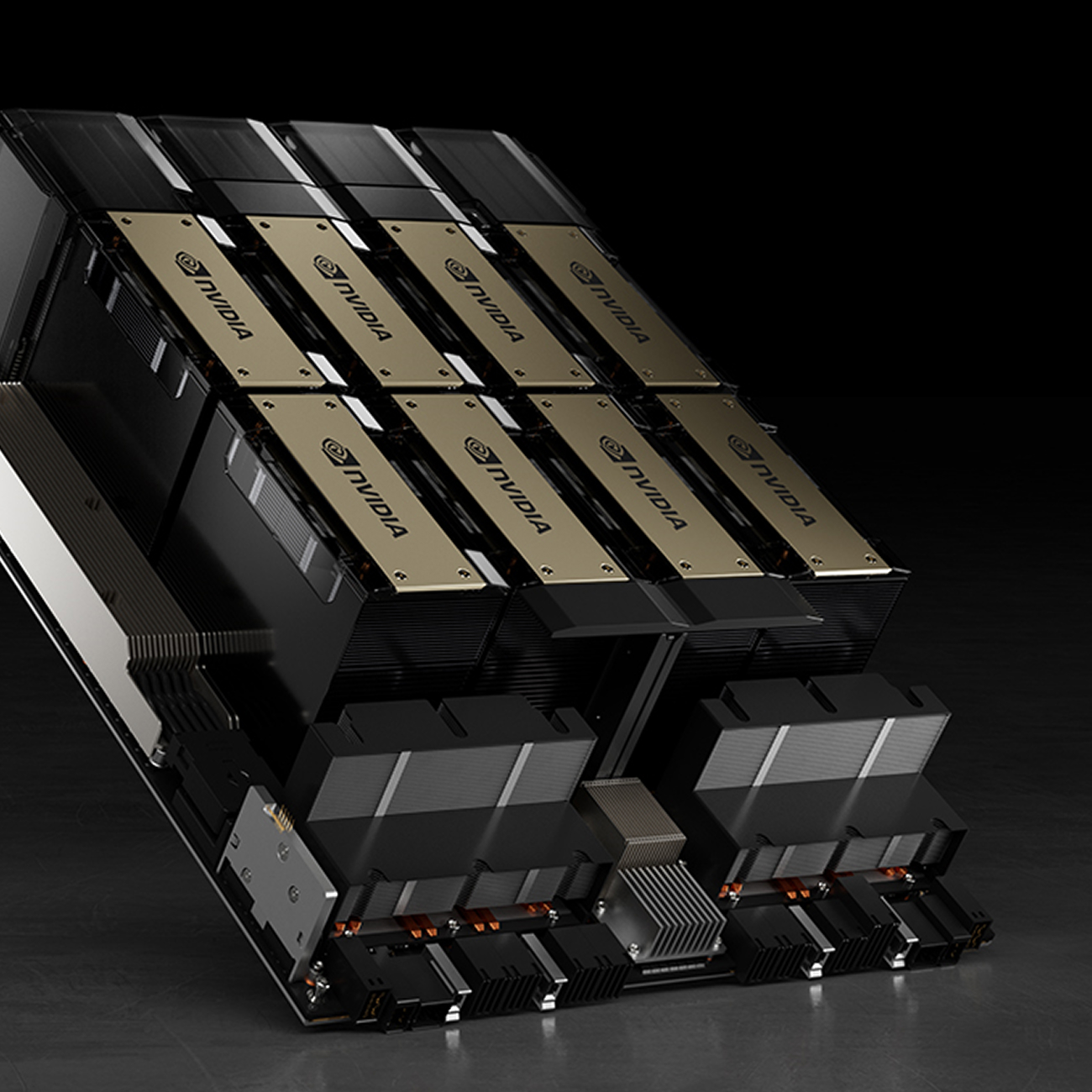
Product illustration: CoreWeave.
CoreWeave finished at $61.39, down 25.2% for the week. Friday’s 11.9% decline wiped out Thursday’s rebound. The concern extended beyond the share price.
Reuters reported that the yield on its October 2031 dollar bond briefly exceeded 16% on Thursday, while the cost of insuring its debt climbed above 1,000 basis points. Investors were demanding substantially more compensation to hold the company’s credit risk.
That does not mean every existing loan suddenly charges 16%. A bond’s yield rises when its market price falls; the coupon on fixed-rate debt stays fixed. The pressure matters when a company needs fresh funding or must refinance debt that is coming due.
For a data-center operator, that distinction is expensive. Servers, buildings and electricity connections absorb cash before customers can use the capacity. A large multiyear contract can support a project without paying every construction bill today. The timing of those receipts matters almost as much as the headline backlog.
Brad Gerstner said Altimeter had sold its entire CoreWeave position. That statement came in an interview, rather than a newly filed quarterly holdings report. Nvidia’s Jensen Huang offered the other side, saying CoreWeave’s financial strength was improving. Neither comment changes the need to fund the next stage of construction.
After a 25% drop, the questions are what financing will cost, when customers pay and how much capital remains to be raised. A cheaper stock can still represent a more expensive business to finance.
|
|
02 / EARNINGS WEEK
The banks had very different quarters.
|

|
|
2009 archive. Z4dude / Wikimedia · public domain.
Goldman’s traders had a very good quarter. Bank of America’s shareholders had a harder week. The results showed why putting every financial company into the same earnings bucket misses most of the story.
| Company |
Q3 revenue |
Week |
| Goldman Sachs |
$18.68B |
−1.6% |
| JPMorgan |
$50.17B |
+2.0% |
| Bank of America |
~$30.0B |
−5.7% |
| BlackRock |
$7.75B |
+4.8% |
USD. Reported revenue; JPMorgan uses reported net revenue. Share-price changes: October 9–16 closes.
Goldman earned $17.01 a share. Equities revenue jumped 72% to $6.44 billion, helped by financing and derivatives activity. Investment-banking fees rose 21% to $3.22 billion. A nervous market can be good business when clients need to trade, hedge or finance their positions.
Expenses rose too, but revenue grew faster. The less comfortable detail was its investment-banking fee backlog, which fell from the previous quarter. Completed deals pay this quarter’s bills; replacing them determines whether the fee income keeps coming.
JPMorgan generated $27.04 billion of net interest income and set aside $2.74 billion for credit losses. Those provisions reduce current earnings for expected losses; they are not all cash losses already incurred. Lending profitability depends on the spread between what a bank earns on assets and pays for funding.
BofA’s lending income improved, but investment-banking fees and fixed-income trading weakened. Excluding its regulatory settlement, expenses still grew faster than revenue. The settlement explains part of the reported profit hit; it does not explain away the pressure in the underlying business.
BlackRock collected $205 billion of net inflows. Its private-markets products represented roughly 2% of assets but 11% of base fees and securities-lending revenue. That is why product mix matters: two firms can manage similar amounts of money and earn very different fees.
Trading activity, lending spreads and management fees respond differently to the same market. Even strong earnings did not guarantee a positive weekly return.
|
|
03 / SHIPPING · DHT / INSW
Tanker rates soared. Share prices didn’t.
|

|
|
Company vessel photograph: DHT media library.
DHT’s $509,100-a-day booking headline was real. It was also only part of the picture. About half its available fourth-quarter spot days had been booked at that rate. Including time charters, approximately 78% of available revenue days were estimated at $225,200 a day.
The contrast with the quarter just completed was striking: DHT estimated third-quarter fleet earnings at $141,300 a day. These are time-charter-equivalent figures, which account for voyage expenses; they are not bottom-line profit. Compare DHT’s booked days and fleet rates.
Friday brought another check on the market. International Seaways expects $480–490 million of quarterly revenue and $340–350 million of net income. Around $50 million of that profit comes from selling a vessel, so it should not be mistaken for recurring charter income.
Seaways had also fixed about 37% of expected fourth-quarter revenue days at blended spot earnings of roughly $180,000 a day. Its preliminary figures remain subject to closing procedures. The separate Bruton transaction would expand its fleet, adding a capital-allocation decision to the earnings story.
Yet DHT fell 4.2% over the week and Seaways lost 8.2%. Exceptional rates do not settle how long those rates last or what is already priced into the shares. Fixed charters can protect income when spot rates weaken, while reducing participation when they surge. Both the rate and the share of days booked deserve attention.
See Seaways’ preliminary earnings and fleet transaction →
|
|
Energy Stocks Are Printing Cash Again
Something has quietly changed in energy.
Supply tighter, demand steady.
LNG exporters, pipelines, infrastructure getting paid on volume.
With AI data centers climbing gas demand and export capacity expanding, cash flow grows.
This briefing breaks down steady producers, midstream players, export names quietly compounding while tech obsesses over headlines.
By clicking, you’ll receive this and other Elite Trade Media LLC financial newsletters, which may include advertiser offers. Publications · Privacy · Unsubscribe anytime.
Discover laptops with built-in intelligence.
Shift your workforce into hyper-productivity mode with Dell Pro laptops powered by Intel® Core™ Ultra with Intel vPro®. Shop on Dell Premier.
|
04 / AI · CHIPS AND EQUIPMENT
TSMC and ASML delivered. Investors sold anyway.
|

|
|
2008 archive. A ansems / Wikimedia · public domain.
TSMC ended the week down 9.0%; ASML fell 7.8%. Neither company’s results suggested that customers had suddenly stopped needing advanced chips or the machines that make them.
TSMC reported $46.72 billion of quarterly revenue and forecast $52.3–54.3 billion for the fourth quarter. The midpoint implies another 14% sequential increase. Its 66.4% gross margin showed how much profit the manufacturing business is currently retaining before operating expenses.
ASML reported €11.7 billion of sales and said planned supply would not fully meet customer demand in 2027 or 2028. It is examining additional capacity. Demand for upgrades to existing machines also helped the quarter, giving customers more output while they wait for new equipment.
Schneider supplied a useful comparison from electrical infrastructure: quarterly sales rose 16.9% organically, and it raised its full-year outlook. Its reference to triple-digit data-center demand growth describes demand, not total company revenue growth.
These businesses occupy different points in the spending chain. Equipment suppliers can book strong sales while the customers financing new capacity face tougher economics. The week showed why impressive demand and disappointing stock returns can coexist. Compare TSMC’s quarter and guidance; read ASML’s capacity outlook.
|
|
05 / AI · ANTHROPIC
Fast growth. A harder conversation about price.
|

|
|
2023 archive. Kimberly White / Getty Images for TechCrunch · CC BY 2.0.
Revenue grew 45% in a quarter. Some investors still wanted a lower valuation. That was the tension in Reuters’ reporting on Anthropic’s investor meeting this week.
The company told prospective investors that third-quarter revenue reached $16.8 billion and that it was profitable on an adjusted basis. Growth remained rapid, but slowed from the previous quarter’s more-than-doubling. Adjusted profitability should not be read as a claim of GAAP net profit.
Some attendees discussed a valuation around $1.5 trillion, compared with roughly $2 trillion previously expected for the planned IPO. These are investor discussions reported by Reuters, not a finalized offering price or an official markdown.
The disagreement is about how much future growth to pay for today. Revenue can keep climbing while the multiple investors are willing to pay falls. A valuation built around extraordinary growth becomes more sensitive to even a modest change in its expected pace.
Anthropic’s eventual pricing will offer a public-market reference for frontier AI economics. Investors in its suppliers and cloud partners already have money exposed to that buildout. Strong demand does not settle what investors should pay for it.
|
|
THE WEEK IN NUMBERS
Apple was the exception.
Mag 7 + AMD, Broadcom and Micron: our editorial watchlist. October 16 closes in USD; price changes versus October 9, excluding dividends.
| Stock |
Friday close |
Week |
| AAPL |
$343.46 |
+2.03% |
| MSFT |
$529.05 |
−1.13% |
| NVDA |
$214.13 |
−6.61% |
| AMZN |
$250.00 |
−4.74% |
| GOOGL |
$340.59 |
−3.15% |
| META |
$709.33 |
−1.30% |
| TSLA |
$354.72 |
−7.31% |
| AMD |
$528.75 |
−13.05% |
| AVGO |
$328.75 |
−9.07% |
| MU |
$878.84 |
−14.59% |
Apple was the only gainer in this ten-stock group. Micron and AMD each lost more than 13%. The headline indexes understated the damage in some of the week’s most closely watched chip names.
|
|
MACRO
Inflation rose. Treasury yields fell.
September consumer inflation accelerated to 3.7% year over year, from 3.4%. Yet the 10-year Treasury yield fell to roughly 5.09% by Friday afternoon, from about 5.24% a week earlier, as demand for government bonds strengthened. Treasury yields and stressed corporate borrowing costs can move in opposite directions. That distinction mattered for the AI financing story. Read the week’s macro breakdown →
|
|
PREDICTION MARKETS
A Roadster collaboration isn’t a merger.
The Tesla–SpaceX market priced a merger announcement by December 31 at about 24% on Saturday. The contract concerns an official announcement, not completion of a deal. This is a current implied probability, not a measured weekly change. The Roadster’s shared technology gives traders a talking point; it does not establish corporate merger plans. See the deadlines and resolution rules →
Polymarket displayed Yes price · October 17, 7:36 a.m. ET. Prices can change.
|
|
ANALYST MOVES
Two different kinds of bullish call.
Semtech: Northland upgraded the shares from Market Perform to Outperform on Friday with a $186 target. Earlier in the week, BMO raised its target from $155 to $230 while retaining Outperform. The first changed the rating; the second changed the valuation target. Neither target is a promised return. Read the Northland upgrade →
|
|
CRYPTO
Coinbase finished the week lower.
Coinbase closed Friday at $173.16, down 3.5% for the week. Saturday’s spot snapshot put Bitcoin at $81,448 and Ether at $2,432. Crypto keeps trading over the weekend; Coinbase shares do not. Its stock also reflects trading activity, costs and company earnings, so it need not match Bitcoin’s return. See Coinbase’s price history →
BTC/ETH: Coinbase spot prices, October 17, 7:36 a.m. ET. COIN: October 9–16 regular-session closes.
|
|
Tomorrow: the coming week’s earnings, company catalysts, options pricing and macro calendar.
Forwarded this email? Get Cash & Chaos in your inbox.
|
|


