| SATURDAY, OCTOBER 31, 2026 / 10-MINUTE READ | CASH & CHAOSMARKETS, MONEY AND THE MADNESS IN BETWEEN. | |
Sponsored by

Good morning. This week showed three different ways AI changes a business: the bill for infrastructure, the cash earned from it, and control over the audience. Amazon lined up hardware financing. Google and Microsoft delivered very different cash outcomes. Reddit described a changing route from search to its communities.
SPY fell 0.56%, QQQ lost 1.97%, and small-cap IWM gained 1.30%. These are ETF price returns. All weekly stock moves below compare October 23 with October 30 regular-session adjusted closes, exclude dividends, and include the whole week—not just an earnings reaction.
|
|
Amazon’s $80 billion credit line changes the AI cash story. |  | Archive image via Forbes Middle East.
AMZN: $240.35 · −3.08% for the week. October 30 close.
Amazon ended the week with a clearer answer to how it can keep buying AI infrastructure faster than operations fund it: borrow against the hardware. Its latest quarterly filing discloses a secured supplier-financing facility allowing up to approximately $80 billion of discretionary borrowings from Q1 2027 through Q3 2028.
This is financing capacity, not $80 billion already borrowed. Availability varies with purchase orders and pricing terms. Each borrowing carries variable interest and matures five years later; purchased assets provide collateral. The distinction matters because a facility gives Amazon flexibility without establishing the final debt balance or cost.
Thursday’s earnings release explains the need. AWS revenue grew 39.3% to $46 billion, but trailing-twelve-month operating cash flow of $168.3 billion fell short of $210.7 billion of net equipment purchases. Free cash flow was negative $42.4 billion. That deficit covers twelve months, not Q3 alone.
Amazon says facility-funded assets will produce long-term debt, with principal classified as debt repayments in financing cash flow. Our reading: a measure focused on operating cash less equipment purchases will need to be assessed alongside debt service as this structure develops.
Borrowing can bridge the period before capacity earns revenue. It cannot determine the return that capacity ultimately earns, and moving a cash obligation to another line of the statement does not eliminate it.
The counterargument is substantial: $28.1 billion of quarterly operating profit exceeded the $26.5 billion top of Amazon’s prior guide. Better cloud economics and a larger financing burden can coexist. Utilization, margins and debt service now belong in the same investment discussion.
|
|
Google and Microsoft put different cash outcomes behind AI growth. |  | Justin Sullivan / Getty Images, via ABC News. 2023 archive.
GOOGL: $279.84 · −12.61% for the week. October 30 close.
This week’s cloud reports established demand much more clearly than they established a shared financial outcome. Google Cloud revenue doubled to $30.7 billion, while Microsoft’s Azure revenue grew 48%. Both serve the AI buildout; their September-quarter cash statements look very different.
Google’s cloud operating profit reached $11.1 billion. Yet group equipment purchases exceeded operating cash generation for a second consecutive quarter. The comparison below uses the same three-month period, unlike Amazon’s twelve-month figure above.
| September quarter | Microsoft | Alphabet |
|---|
| Operating cash flow | $58.0B | $42.3B | | Cash equipment purchases | $39.4B | $51.4B | | Free cash flow¹ | +$18.6B | −$9.1B |
Sources: Microsoft and Alphabet. Rounded. ¹Operating cash less cash property/equipment purchases; non-GAAP. Excludes other investing and financing cash flows.
Microsoft’s positive cash balance after equipment purchases is meaningful counterevidence to the idea that every cloud expansion must immediately consume more than it generates. Its quarterly revenue of $92.3 billion also cleared the prior $89.85–$90.95 billion guide. Growth can fund some investment while equipment bills and delivery timing still change the picture.
Google’s existing search business also remains powerful: Search revenue grew 12%. Alphabet’s total operating profit rose 30%, while investment losses weighed on net earnings. A falling EPS headline does not establish that its operating business deteriorated.
Our conclusion: demand, operating profitability and cash conversion are separate tests. Google needs its larger cloud business to cover more of the investment bill. Microsoft’s surplus is encouraging, but one quarter cannot establish the lifetime return on new capacity.
|
|
Intel shows how the AI boom can squeeze the PC business. |  | Coolcaesar / Wikimedia. Santa Clara, 2023. · Creative Commons license
INTC: $65.76 · −24.38% for the week. October 30 close.
Intel’s report split the semiconductor story in two: strong server demand and a deteriorating PC outlook. Datacenter and AI revenue rose 78% to $7.3 billion, while client revenue fell 5% to $8.1 billion. Total sales still grew 21% to $16.5 billion.
The forward numbers were harder to celebrate. Q4 revenue guidance of $15–$16 billion implies roughly a 6% sequential decline at the midpoint. Adjusted EPS guidance is $0.25, compared with $0.52 delivered in Q3. Management expects the PC slowdown to persist at least through the first half of 2027.
The just-reported quarter was stronger than that outlook suggests. Revenue landed inside the prior $15.8–$16.8 billion range, and adjusted EPS exceeded the $0.38 guide. Calling the whole report a failure would miss the distinction between delivered performance and weakening expectations.
The mechanism matters beyond Intel. More infrastructure demand can help server suppliers while expensive components and constrained budgets make finished PCs harder to sell. An AI spending boom does not automatically translate into a stronger replacement cycle for every computer on an employee’s desk.
Foundry also remains a separate recovery project: its operating loss narrowed to $1.85 billion from $2.32 billion a year earlier. That is progress, but substantial internal revenue is eliminated when Intel consolidates its accounts. It is not equivalent to the same volume of profitable outside orders.
The week supports a server recovery with limits. Improving supply and manufacturing economics could help earnings; a prolonged client slump could offset part of that improvement. Intel’s businesses need to be understood separately.
|
|
Reddit tests a login gate as search referrals fall. |  | Reddit office photograph, via 01net. 2024 archive.
RDDT: $91.73 · −36.41% for the week. October 30 close.
Reddit’s earnings exposed another consequence of the AI transition: owning useful content does not guarantee owning the route users take to reach it. Revenue grew 53% to $895 million and advertising grew 54%. Search referrals nevertheless weakened, with management warning of a possible low-double-digit Q4 decline in daily active uniques if the trend continues.
In its shareholder letter, management describes search evolving from a gateway to websites into an AI-powered destination. October referrals fell by more than one million on average per week. That establishes a distribution problem; it does not isolate AI answers as the sole cause of every lost visit.
Reddit’s response includes a planned shift toward a logged-in-only experience. Q4 tests begin in selected markets outside the U.S.; the global version depends on the results. Management says login improves personalization and ad targeting while helping protect its content corpus. This is a strategic transition, not a worldwide gate already switched on.
There is meaningful protection in the current business. Logged-in and app users grew sequentially and together generate over 80% of monetization, according to management. Fewer casual search visits need not translate dollar for dollar into lost advertising revenue.
But casual visitors can become tomorrow’s regulars. Requiring login may strengthen direct relationships while adding friction at the entrance. Our reading: the financial test is whether retained, directly acquired users offset weaker search discovery without an increasingly expensive marketing bill. AI can create demand for infrastructure and simultaneously challenge the businesses supplying the information people seek.
|
|
|
Elon Musk. Jensen Huang. Washington. What’s the Connection?
AI is moving into the physical economy.
Elon is building it. Jensen sees it in Agriculture. Washington is backing it. And DIT AgTech is already putting it to work in livestock.
Most investors haven’t connected the dots yet.
At $1 a share, you still can.
A CRM so smart, it updates itself.
HubSpot's CRM is so smart, it now updates itself. Calls get logged and summarized the moment they end. New leads get researched and a first outreach drafted, automatically. Deals move forward on their own, with next steps flagged before you have to ask.
Even the one repetitive task you've been meaning to fix can now run itself, no code required. Customers using it are already seeing the difference.
This isn't the CRM you have to work hard to figure out. It's the one already working before you log in.
Tech’s weekly losses, ranked.| Company | Week |
|---|
| Reddit (RDDT) | −36.41% | | Intel (INTC) | −24.38% | | Coinbase (COIN) | −12.72% | | Alphabet (GOOGL) | −12.61% | | Sandisk (SNDK) | −7.04% | | Meta (META) | −4.30% | | Amazon (AMZN) | −3.08% | | Nvidia (NVDA) | −3.00% | | AMD | −2.32% | | Apple (AAPL) | −0.89% | | Microsoft (MSFT) | −0.50% |
October 23–30, 2026. Selected tech and internet shares; adjusted close-to-close price changes, excluding dividends. These are weekly losses, not peak-to-trough drawdowns. Tesla (+7.41%), Broadcom (+1.37%) and Micron (+0.82%) finished the week higher.
Strong growth did not remove concerns about future cash and profits. Reddit’s search-referral warning raised questions about future audience growth. Intel’s weaker PC outlook complicated its server recovery. Amazon and Alphabet demonstrated cloud demand while equipment investment pressured cash flow. Our reading: investors were weighing future earnings against heavier investment requirements and risks to customer acquisition.
The weekly result also hides the path. Intel fell 28.58% on Friday but 24.38% across the week; AMD fell 10.88% on Friday but 2.32% for the week. Earlier gains cushioned both weekly declines. These moves span several sessions and cannot be attributed entirely to one earnings announcement.
|
|
Lilly lifts its sales outlook while prices keep falling. |  | Shutterstock, via WFYI. Headquarters archive.
LLY: $1,417.54 · +11.31% for the week. October 30 close.
Lilly demonstrated that much greater treatment volume can outweigh lower realized prices. Q3 revenue rose 39% to $24.4 billion, supported by a 53% volume increase and partly offset by a 15% decline in realized prices. The business grew by reaching more patients, rather than simply collecting more per treatment.
Management raised its annual revenue range from $85–$87 billion to $91–$92 billion. That is a $5.5 billion increase at the midpoint, roughly 6.4%. It is a material change in the scale expected this year, not merely a strong quarterly growth rate.
The earnings guidance requires care. The non-GAAP EPS range moved from $35.50–$36.50 to $35–$36. Underlying improvement added $4.07 at the midpoint, but Q3 acquired research-and-development charges subtracted $4.57. Both the improved operations and the acquisition cost belong in the explanation.
There are limits to treating the quarter as a clean run rate. Revenue included approximately $900 million of benefits, chiefly milestones and favorable rebate-and-discount adjustments. Those benefits are different from recurring prescription growth. Global price pressure also means volume must keep doing substantial work.
For shareholders, manufacturing, access and product demand supported a larger revenue outlook despite lower prices. Durable gains require converting that volume into profit after production, selling and research costs. Not every dollar of this quarter’s revenue is equally repeatable.
|
|
GE Vernova turns power demand into a much larger cash outlook. | 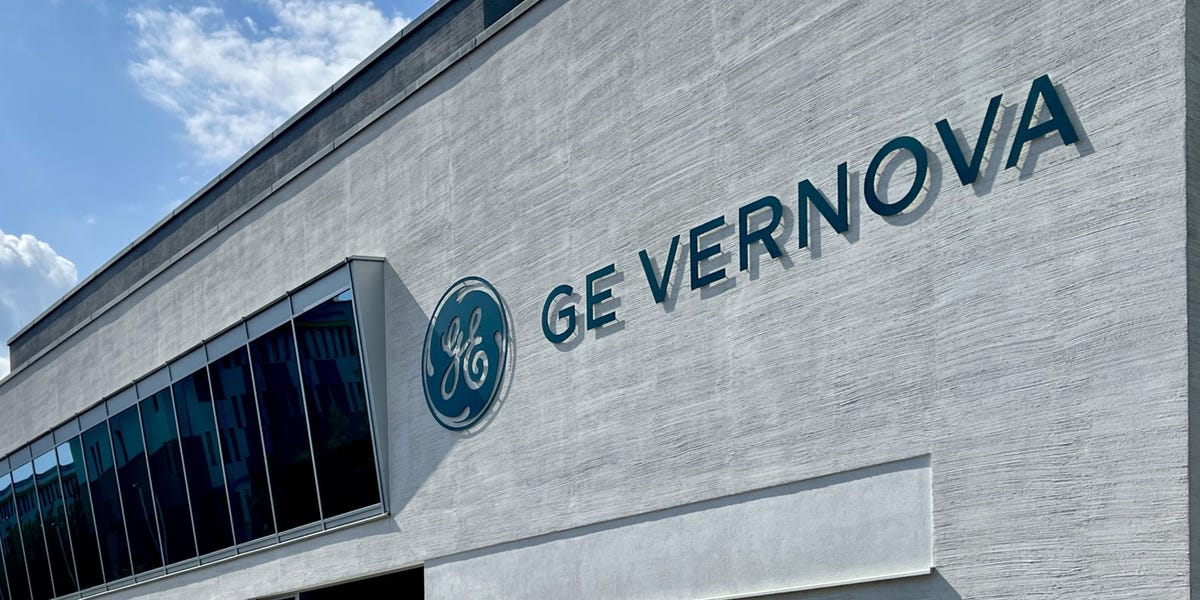 | GE Vernova, via Recharge. Archive.
GEV: $857.87 · +5.26% for the week. October 30 close.
GE Vernova’s most consequential change was a $4.5 billion increase in the midpoint of its annual free-cash-flow outlook. The new $16–$17 billion range replaces $11.5–$12.5 billion. That is a 37.5% midpoint increase, supported by Q3 free cash flow of $5.4 billion.
Operating delivery improved alongside the order book. Power revenue grew 25%, and its EBITDA margin reached 21.4%, above July’s Q3 expectations of 17–19% growth and a 17–18% margin. The $197 billion backlog is therefore accompanied by stronger realized segment profitability.
Still, cash arriving early is not the same as profit already earned. Working-capital benefits helped the quarter; customer advances fund manufacturing before equipment is delivered. Gas equipment’s 122-gigawatt pipeline includes 64 GW of orders and 58 GW of slot reservations, which are different stages of commitment.
The week strengthened the case that the power bottleneck is producing business results. It also increased future delivery obligations. Converting reservations, manufacturing on schedule and maintaining margins will determine how much of today’s demand becomes durable shareholder value.
|
|
The Fed paused. Two officials wanted a hike.Wednesday’s Fed decision held the target range at 3.75–4.00% in a 10–2 vote. Lisa Cook and Beth Hammack preferred a quarter-point increase. The statement described strong activity and elevated inflation. For companies committing capital today, the consequence is that a pause has not established cheaper financing ahead. Higher borrowing costs can persist even while revenue grows.
|
|
Prediction markets still lean toward a December hike.The “Fed Decision in December?” contract displayed roughly 71% for a quarter-point increase and 28% for no change when checked at 12:40 a.m. ET on October 31. The market references the December 8–9 meeting and the Fed’s target-range decision. These are market prices, not Fed forecasts.
|
|
|
Crypto: Coinbase’s profit did not establish a trading recovery.Coinbase shares lost 12.72% for the week. Its Q3 disclosure reported $718.7 million of net income, including a $715 million pretax investment-asset gain. Transaction revenue fell 44% year over year to $590 million. Investment gains and customer trading are different earnings drivers; the profit headline does not establish a trading recovery.
|
|
Forwarded this email? Get Cash & Chaos in your inbox.
Independent market commentary. C&C interpretations are analysis; forecasts and analyst targets are not guarantees.
|
|
|


